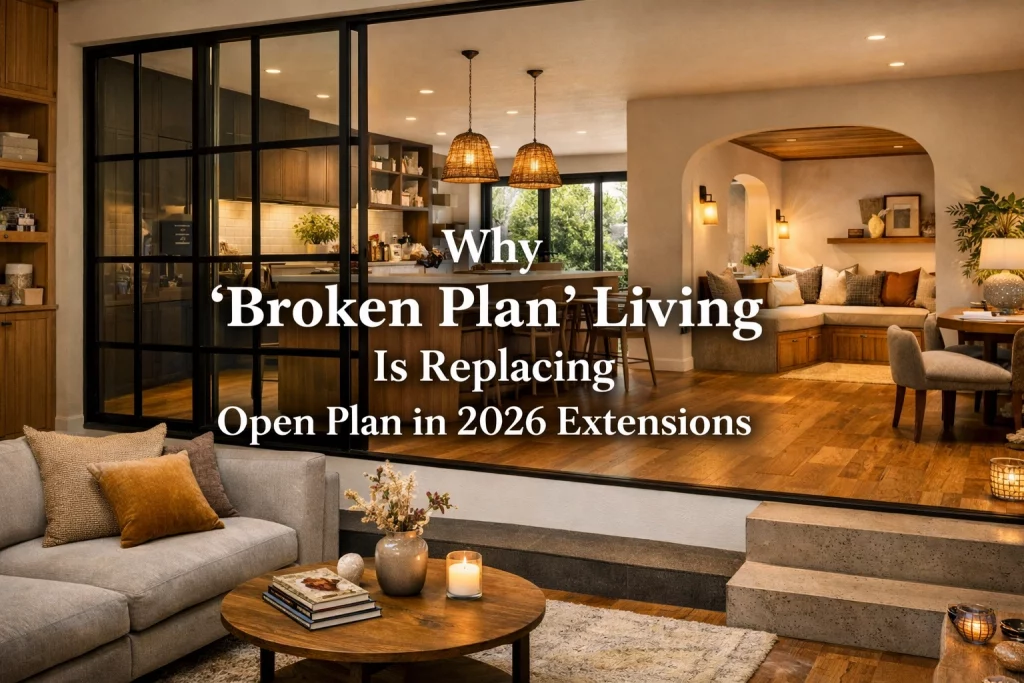
Remember when knocking down every wall to create one vast open-plan space was the dream? You probably watched countless home renovation shows where the big reveal featured an expansive kitchen-living-dining area with barely a divider in sight. But if you're planning an extension in 2026, you might be surprised to learn that the design world has moved on: and for good reason.
The trend sweeping through home extensions this year isn't about going back to traditional closed-off rooms. Instead, it's something called 'broken plan' living, and it's solving problems that many open-plan homeowners have been quietly struggling with for years.
What Exactly Is Broken Plan Living?
Think of broken plan as open plan's more sophisticated, practical cousin. Rather than creating one enormous space where everything happens at once, broken plan design introduces subtle divisions that create distinct zones without losing that sense of light and flow you love about open layouts.
You might use a half-height wall to separate your kitchen from the dining area. Or perhaps a freestanding shelving unit creates a buffer between your workspace and the main living zone. The key difference is this: you're creating definition and purpose in your space without building solid floor-to-ceiling walls that close everything off completely.
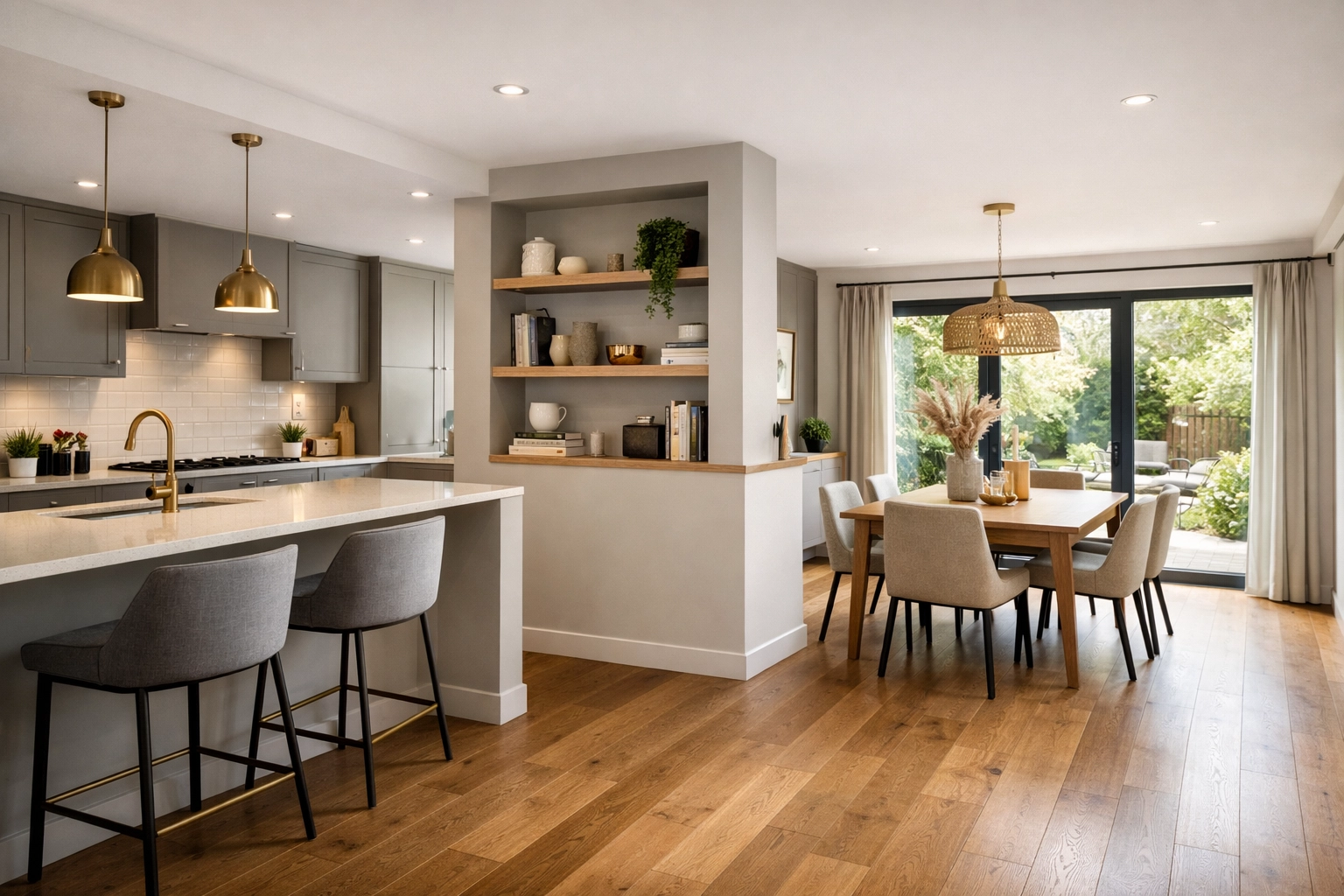
The beauty lies in the flexibility. You still get those sight lines across the space. Natural light can flow throughout. But you also gain something invaluable: the ability to use different areas for different purposes without one activity dominating the entire extension.
Why Open Plan Isn't Working for Everyone Anymore
Let's be honest about the challenges. If you've been living in a fully open-plan space, you've probably noticed that sound carries everywhere. When someone's cooking dinner, the entire family hears every chop, sizzle, and clatter. If the kids are watching television while you're trying to have a phone conversation, good luck with that.
The pandemic changed how we use our homes dramatically. Suddenly, your open-plan kitchen-diner became a school classroom, a home office, a meeting room, and a restaurant all at the same time. Many families discovered that one big undivided space simply couldn't accommodate all these competing demands comfortably.
Privacy became a luxury. If you needed to take a work call, there was nowhere to go without disturbing others or being disturbed yourself. If one person wanted to watch a film while another needed to concentrate on work, the open plan created conflict rather than harmony.
There's also the visual clutter issue. In a completely open space, everything is on display all the time. That pile of post on the kitchen counter? Visible from the sofa. The breakfast dishes still in the sink? Front and center when you're trying to relax in the evening. With nowhere to hide the everyday mess of life, many homeowners found themselves feeling like they could never properly relax in their own homes.
How Broken Plan Solves These Real-World Problems
Broken plan design addresses these issues while keeping the aspects of open living that actually work well. When you're planning an extension in Bournemouth, Poole, or Christchurch, this approach gives you remarkable flexibility to create a space that genuinely works for how your family lives.
Acoustic Comfort Without Isolation
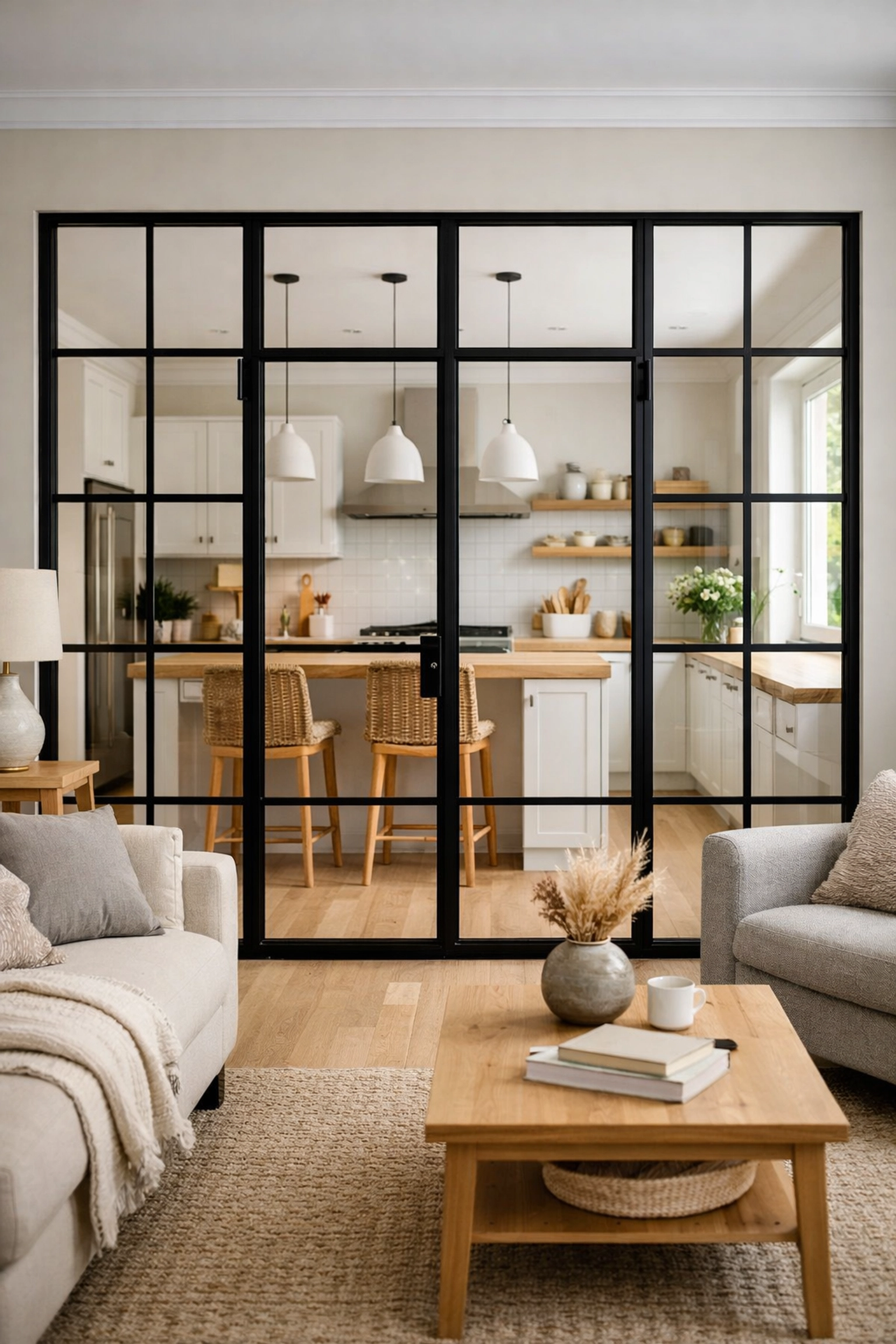
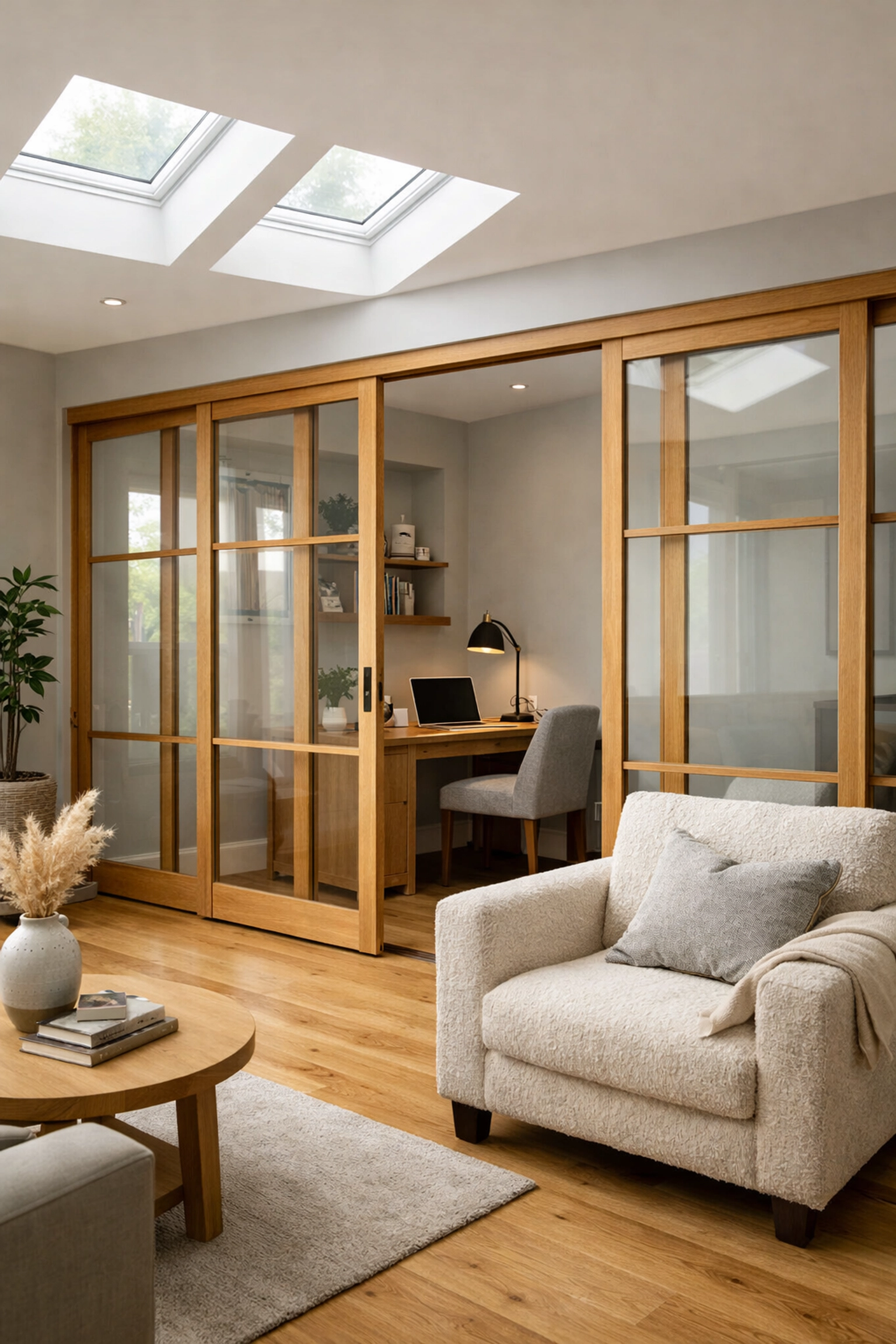
By introducing partial dividers, you create natural sound barriers without closing spaces off entirely. A glazed internal screen between your kitchen and living area means you can see through and maintain that open feel, but cooking noise doesn't dominate the whole space. Someone can work in one zone while others watch television in another: without everyone needing headphones.
Flexible Zones That Adapt Throughout the Day
Your extension can shift purpose depending on what you need. That area by the window might be a breakfast nook in the morning, a homework station in the afternoon, and a cosy reading corner in the evening. Because the zones are defined but not sealed off, family members can still feel connected while pursuing different activities.
Visual Organisation That Reduces Stress
Subtle divisions mean you can contain mess to specific zones. Your kitchen work area can be slightly separated, so when you're entertaining, guests don't have a direct view of the chaos of meal preparation. This isn't about hiding your life away: it's about creating intentional spaces where everything has its place.
Practical Ways to Incorporate Broken Plan Design in Your Extension
If you're convinced that broken plan makes sense for your project, here's how it might work in practice when you're designing your extension.
Strategic Structural Elements
Rather than one long uninterrupted space, consider including a supporting column or pier that creates a natural division point. This structural element can define where your dining area ends and your living zone begins, while still allowing free movement and sight lines between them.
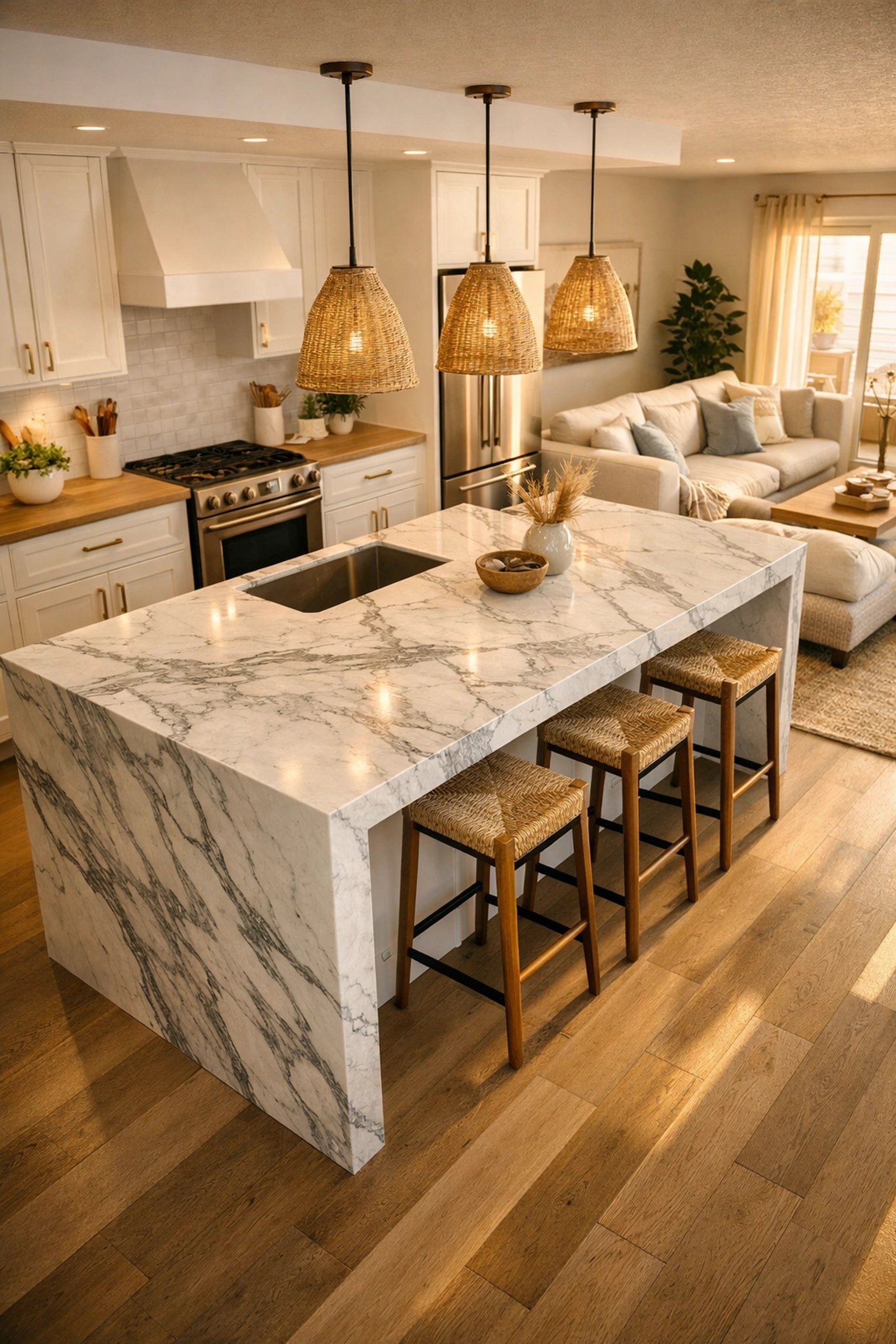
A breakfast bar or kitchen island can serve as a functional divider. It separates the working kitchen from the social space without blocking views or light. You get defined zones with clear purposes, but the cook can still chat with family or guests while preparing meals.
Clever Use of Different Floor Levels
If your extension design allows for it, a subtle step up or down between zones creates psychological separation without physical barriers. You might have your main living area on one level and a snug or study area raised by just one step. It's a remarkably effective way to signal a change in space purpose.
Flexible Room Dividers
Sliding screens, pocket doors, or folding partitions give you ultimate flexibility. Leave them open most of the time for that spacious feel, but close them when you need acoustic separation or privacy. This works brilliantly if you're incorporating a home office into your extension: open when you want to feel part of the household, closed when you need to focus or take calls.
Furniture as Architecture
A carefully positioned bookshelf, a back-to-back sofa arrangement, or a console table can create just enough division to define separate zones without any construction at all. This approach is particularly clever because you can adjust or move elements as your needs change over time.
Is Broken Plan Right for Your Extension Project?
The honest answer depends on how you actually live. If your family thrives on being together in one big space and you haven't experienced any of the challenges we've discussed, a traditional open plan might still be perfect for you.
But if you're finding that everyone needs different things from your home at the same time: if you're juggling work calls with home schooling, or trying to relax while meal preparation is in full swing: broken plan offers a smarter solution. It's particularly valuable if multiple generations are living under one roof, or if your home needs to serve as both a productive workspace and a relaxing sanctuary.
When you're planning a rear extension or considering how house extensions work, think about your daily routines. How many different activities happen simultaneously? Do you need visual connection between spaces but acoustic separation? Would different zones help reduce conflict and increase everyone's comfort?
The beauty of working with experienced extension specialists is that they can help you find the right balance for your specific situation. There's no one-size-fits-all answer, and your extension should be designed around how you actually live, not just what's fashionable.
Looking Beyond the Trend
What makes broken plan living more than just a passing trend is that it addresses genuine functional needs. As our homes continue to evolve and serve multiple purposes: especially with hybrid working becoming permanent for many families: having spaces that can adapt and flex becomes increasingly valuable.
Your extension represents a significant investment in your home and your family's quality of life. Creating a layout that offers both connection and separation, openness and definition, means you're building something that will continue to work well as your circumstances change over the coming years.
Whether you're extending at the rear, to the side, or even considering a loft conversion alongside your ground floor work, the principles of broken plan design can be adapted to create more functional, comfortable spaces that truly enhance how you live.
The question isn't whether open plan or traditional layouts are better: it's about finding the right solution that gives you the best of both worlds. And in 2026, that solution increasingly looks like broken plan living.