
Are you starting to feel like your home in Bournemouth is bursting at the seams? Maybe you’ve added to your family, or perhaps that "temporary" home office on the kitchen table has become a permanent, cluttered fixture of your life. If you’re considering moving, you’ve likely seen the local property prices and decided that staying put and looking "up" is the smarter move.
Converting your loft into a master suite or a playroom is the ultimate space-saver, but before you start picking out Farrow & Ball shades for the new walls, we need to talk about the "boring" stuff. Specifically, fire regulations.
Now, I know what you’re thinking: building regulations are about as exciting as a rainy Tuesday at Bournemouth Pier. However, when it comes to loft conversions, these rules aren't just red tape, they are literally designed to save your life and the lives of your family. At The Big Conversion Company Ltd., we believe that safety shouldn't be a mystery.
Here is everything you need to know about loft conversion fire regs, distilled into a cheat sheet that won’t make your eyes glaze over.
Why Do the Rules Change When You Go Up?
If you're simply painting a bedroom, nobody cares. But once you decide to turn a non-habitable attic into a liveable room, your house transitions from a two-storey home to a three-storey home (in the eyes of the law).
Fire behaves differently in a three-storey building. Heat and smoke rise, and if a fire starts in the kitchen on the ground floor, the person in the new loft room is the most vulnerable. This is why Building Regulations Part B exists. It’s not just a suggestion; it’s a legal requirement. If you ignore these, you won't get a completion certificate, your insurance will be as valid as a chocolate teapot, and you'll struggle to sell your house later.
1. The Protected Escape Route: Your Path to Freedom
The most critical part of loft conversion fire safety is the "protected escape route." This is a fancy term for a hallway and staircase that can withstand fire for at least 30 minutes, giving you enough time to get from the top of the house out the front door.
In a standard two-storey house in Poole or Christchurch, you can usually jump out of a first-floor window in an absolute emergency (though we wouldn't recommend it). From a second-floor loft? That’s a long drop.
To create a protected route, you generally need:
- Fire-resistant walls: The walls surrounding your staircase must be able to hold back flames for half an hour.
- A continuous path: The stairs from the loft must lead directly to a hall with an exit to the outside. You can’t usually have the stairs landing in the middle of an open-plan living room unless you install an automated mist system (which is cool, but pricey).
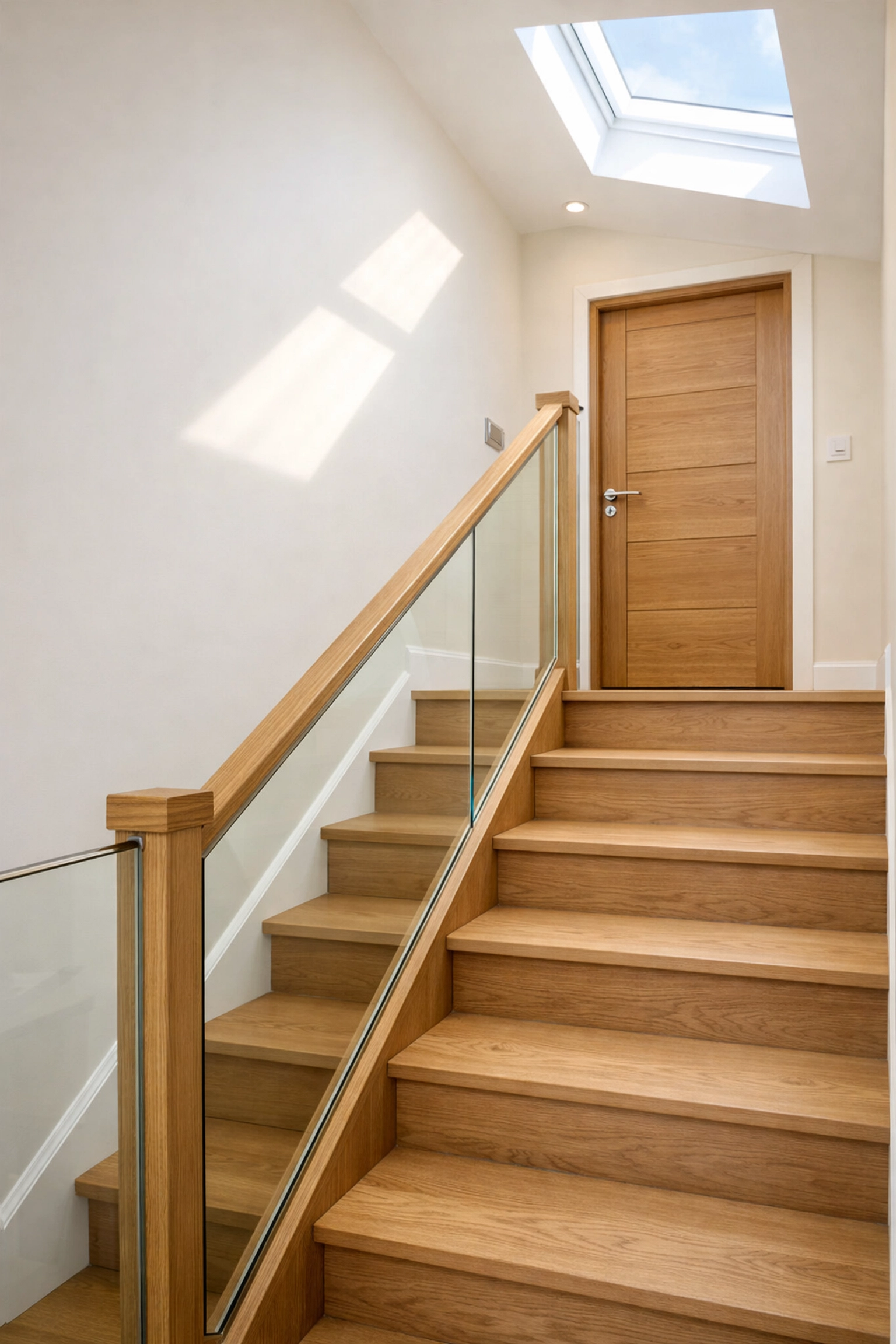
Alt text: A modern loft conversion staircase showing a clear, protected escape route in a Bournemouth home.
2. Fire Doors: The 30-Minute Heroes
If you’re doing a loft conversion, say goodbye to your standard internal doors and hello to FD30-rated fire doors. Every door that leads onto the protected escape route (the landing and stairs) must be replaced with a fire door.
This includes the doors to your existing bedrooms on the first floor and the new door to the loft room itself. Why? Because if a fire starts in a bedroom on the first floor, a standard door will burn through in minutes. An FD30 fire door will hold it back for 30 minutes, keeping the staircase clear of smoke and flames.
The "Witty" Reality Check: Yes, fire doors are heavier. Yes, they used to look like they belonged in a 1970s hospital. But modern fire doors come in every style imaginable. You can have your trendy oak shaker doors and still be fire-safe. Just don't forget the intumescent strips: those clever little seals that expand when heated to block smoke.
3. Smoke Alarms: The Loudest Party Guests
In a new loft conversion, battery-operated smoke alarms from the local hardware store won’t cut it. You need a "Grade D" system. This means:
- Mains Powered: They are wired into your home’s electrical system.
- Battery Backup: In case the power goes out during a fire.
- Interlinked: This is the big one. If the toaster catches fire in the kitchen, the alarm in the loft needs to go off instantly.
You’ll need an alarm on every level of the house: the hallway, the first-floor landing, and the new loft landing/room. It’s the ultimate early warning system for your family.
4. Structural Integrity: Don't Let the Floor Give Way
This is the part people often forget. If a fire starts on the first floor, the ceiling (which is now the floor of your new loft) needs to stay solid.
Standard lath-and-plaster ceilings found in many older Bournemouth Victorian homes won't survive a fire for long. During a conversion, we often have to "fire-line" the ceilings. This usually involves adding a layer of fire-resistant plasterboard or using special intumescent paint. It ensures that the structural elements of the house stay standing long enough for everyone to get out.
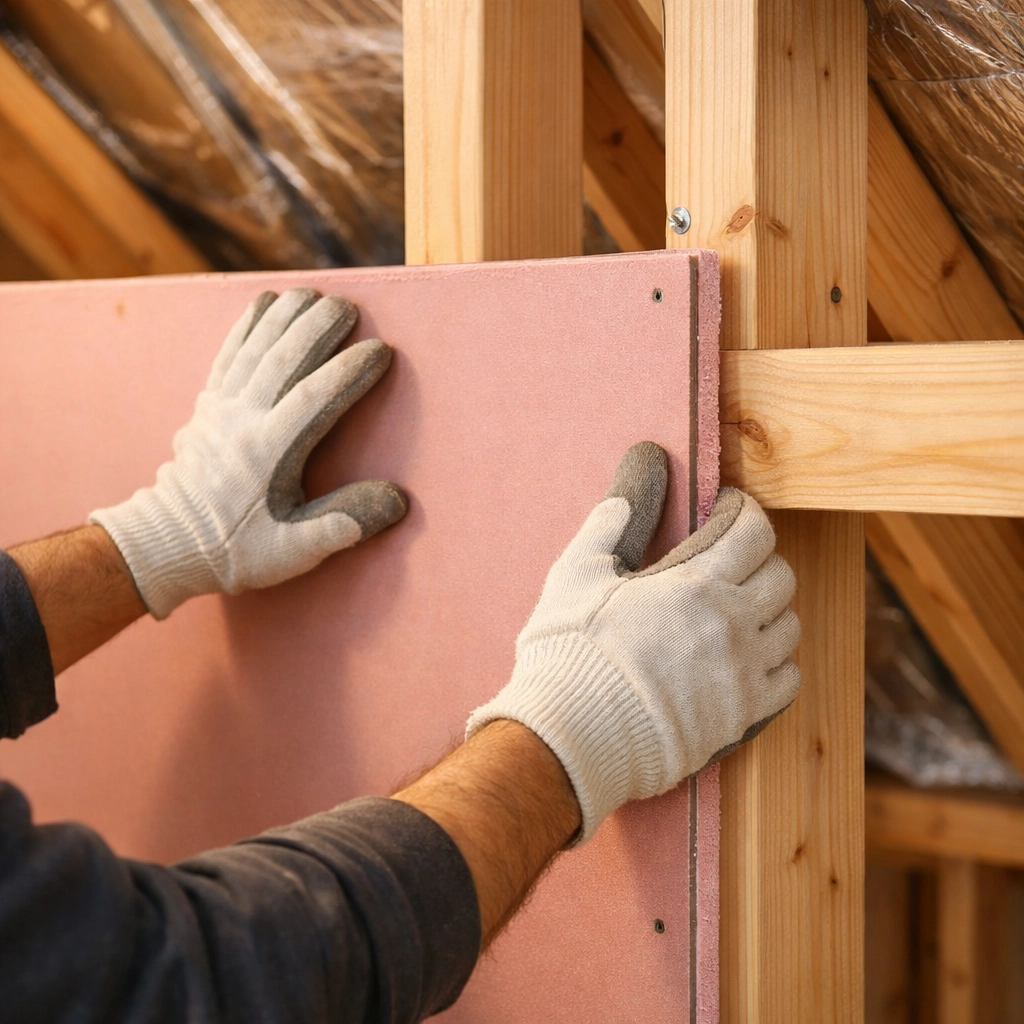
Alt text: Fire-resistant plasterboard being installed during a loft renovation to meet UK building regulations.
5. Escape Windows: The Plan B
While the staircase is your primary escape route, the building regs also specify requirements for windows. In a loft conversion, your new windows don't necessarily have to be "escape windows" if you have a protected staircase, but they do need to meet certain size and height requirements for ventilation and light.
However, if you are doing a "gallery" style loft or certain types of open-plan conversions, escape windows become much more strictly regulated. They need to be large enough for a person to climb through (at least 0.33m² of clear opening) and positioned so you don't need a telescope to see out of them.
6. The "Wait, How Much Will This Cost?" Question
We get it. Replacing six doors and rewiring your smoke alarms feels like an added expense when you just wanted a nice ensuite. But if you're curious about the total investment for your project, our loft conversion calculator can give you a much clearer picture of the costs involved, including the necessary safety upgrades.
If you’re also considering an extension downstairs to balance out the new space, our house extension calculator is a great place to start.
Why Choose a Professional for Your Bournemouth Loft?
You might be tempted to hire a "man with a van" who says he can "knock it out for half the price." But fire regulations are notoriously nuanced. For example, did you know that if your new loft floor is more than 7.5 metres above ground level, the requirements for sprinkler systems or second escape routes might kick in?
At The Big Conversion Company Ltd., we live and breathe these regulations so you don't have to. We handle the building control applications, the inspections, and the final certification. Whether you are in Southbourne, Winton, or Sandbanks, we ensure your home isn't just beautiful, but a fortress of safety for your kids.
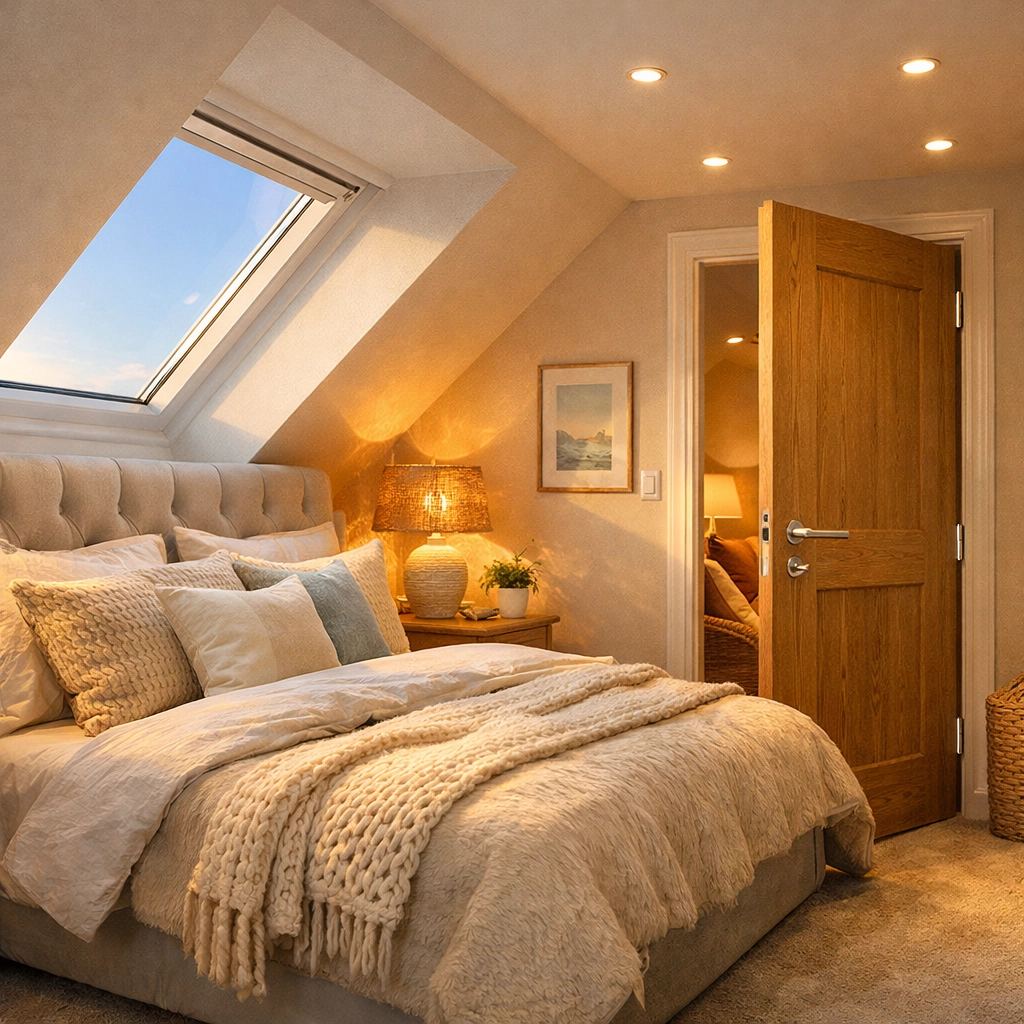
Alt text: A completed, high-end loft conversion in Poole, showcasing safe design and modern fire doors.
Summary: The 3-Minute Checklist
Before you sign any contracts, run through this quick checklist for your loft conversion:
- Do I have a clear path from the loft to the front door?
- Are all doors on that path FD30 rated?
- Are my smoke alarms interlinked and mains-powered?
- Has the floor/ceiling been treated for 30-minute fire resistance?
- Will I get a Building Regulations Completion Certificate at the end?
If the answer to any of these is "I’m not sure," it’s time to talk to the experts.
Ready to Level Up Your Home?
Adding a loft conversion is one of the best ways to increase the value of your property in the Bournemouth and Poole area. It turns a cramped house into a spacious home without the stress of moving.
If you're ready to start your journey: or if you just want to check how much that extra bedroom will set you back: take a look at our price page or see our current and completed projects for some local inspiration.
Don't let fire regs keep you up at night. With the right team, they are just another box to tick on the way to your dream home.
Feeling overwhelmed? Contact us today and let’s talk about how we can make your loft conversion safe, legal, and stunning.
For more information on our services, visit our dedicated loft conversion page or explore our Bournemouth home renovation company services.