
So you're thinking about converting your loft. You've measured the headroom, you've dreamed about that new bedroom or home office, and you're ready to get started. Then someone mentions "building regulations" and suddenly it feels like you need a law degree just to add a room to your own home.
Sound familiar?
Don't worry. Building regs aren't as scary as they sound, and by the time you finish reading this, you'll know exactly what's involved. Grab a cuppa, this won't take long.
First Things First: What Are Building Regulations?
Building regulations are the rules that make sure any construction work in your home is safe, structurally sound, and energy-efficient. They're there to protect you, your family, and anyone who might live in the property in the future.
Here's the bit that catches a lot of homeowners off guard: building regulations approval is mandatory for all loft conversions in the UK. Yes, all of them. Even if you don't need planning permission (which most loft conversions don't), you still need to meet building regs.
Think of it this way, planning permission is about whether you can build something. Building regulations are about how you build it safely.
Why Should You Care?
Beyond the obvious safety reasons, there are some pretty practical ones too:
-
Selling your home – Without a completion certificate proving your loft conversion met building regs, you could face serious problems when you come to sell. Buyers (and their solicitors) will ask for it.
-
Insurance – Your home insurance could be invalidated if work was done without proper approval.
-
Peace of mind – Knowing your conversion has been signed off by a Building Control surveyor means you can sleep soundly in your new loft bedroom.
The Key Areas Building Regs Cover
Right, let's break this down into the bits that actually matter. Building regulations for loft conversions cover six main areas. Here's what each one means in plain English.
1. Structural Safety
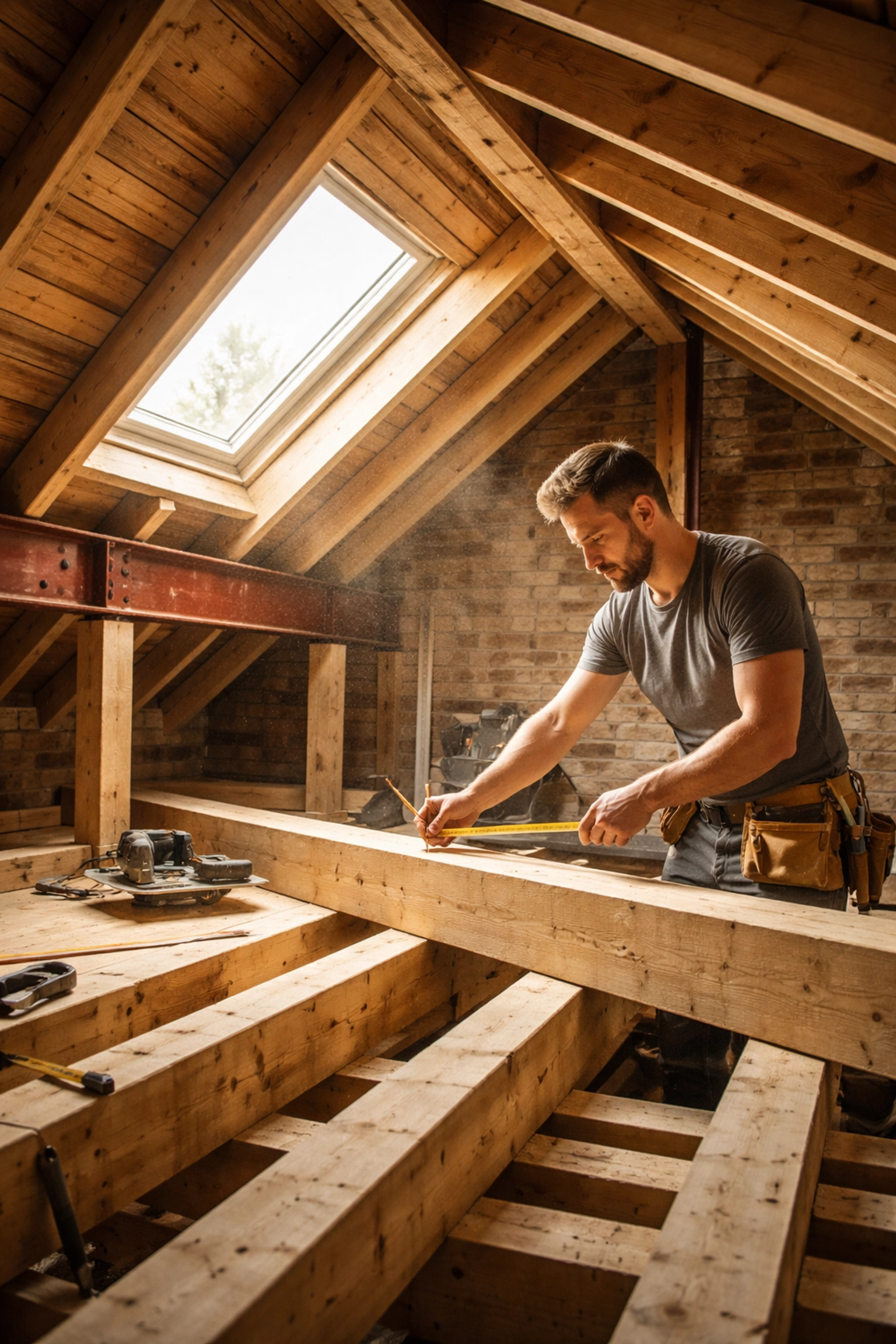
Your loft wasn't originally designed to be a living space. Those ceiling joists below? They were built to hold up a bit of insulation and maybe some Christmas decorations: not a bed, wardrobe, and people walking around.
Building regs require that:
- The existing joists are reinforced or replaced to support a proper floor
- The roof structure remains stable with any changes you make
- A structural engineer signs off that everything is sound
This is non-negotiable stuff. You need the floor to hold you up, after all.
2. Fire Safety
This is where building regs get particularly thorough, and for good reason. When you add a loft conversion, you're creating another storey that people might need to escape from in an emergency.
Here's what's typically required:
- Smoke alarms on every level of your home, interconnected so they all go off together
- Fire-rated doors between the loft and the stairway (usually FD30 doors that resist fire for 30 minutes)
- Escape windows in the loft that meet specific size requirements: big enough to climb through
- Protected escape route – if your loft floor is more than 4.5 metres from ground level, you'll need a different solution, usually a protected stairway with direct access to an external door
The rules might sound strict, but they exist because getting out of a loft during a fire is genuinely harder than escaping from ground level.
3. Stairs and Access
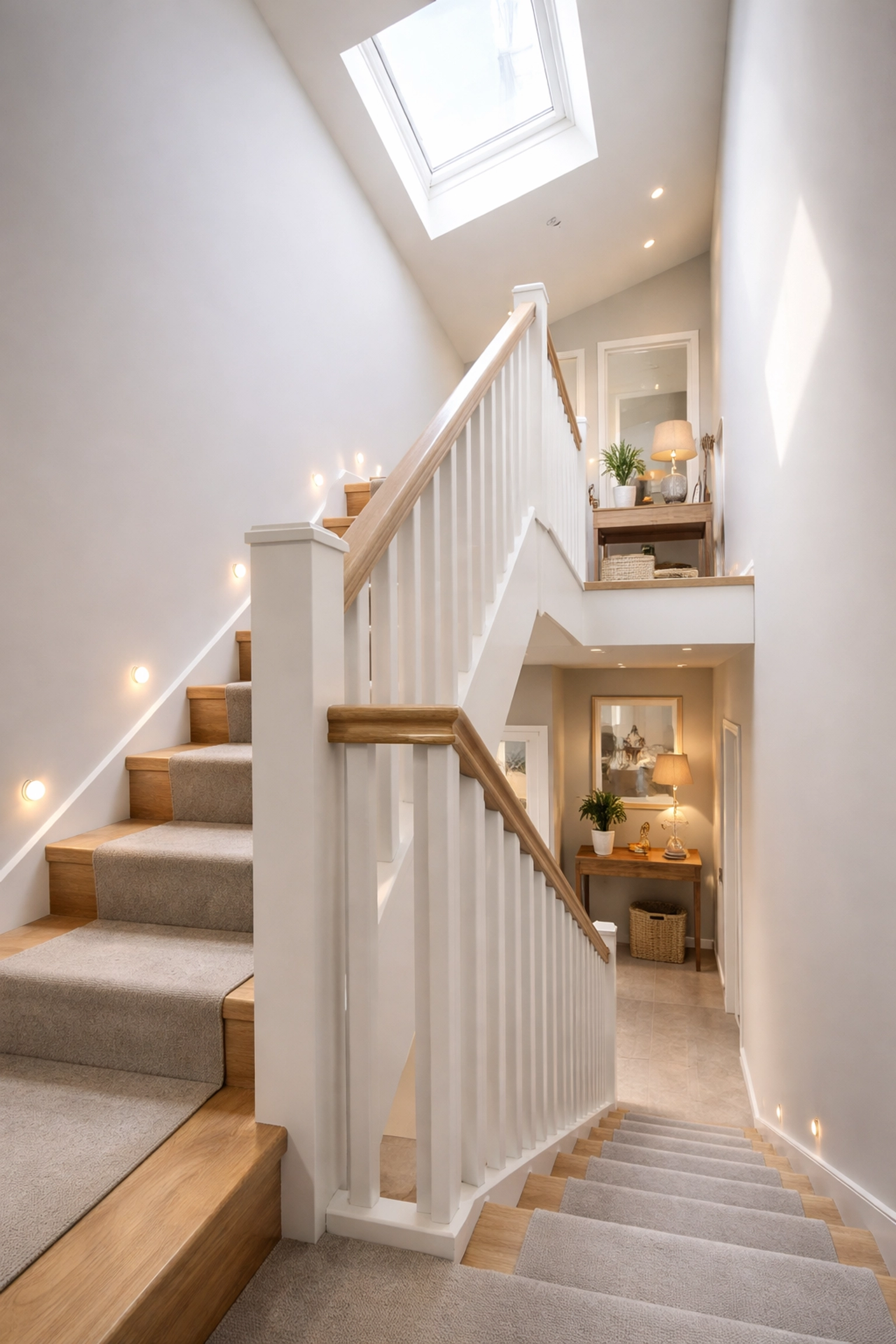
You can't just throw up a ladder and call it a day. Your new staircase needs to meet specific standards for:
- Width and headroom
- Pitch (the angle of the stairs)
- Handrails and balustrades
- Safe landing areas at the top and bottom
The staircase also needs to fit within your existing layout without compromising the fire escape route. This is where clever design really comes into play, especially in homes around Bournemouth, Poole, and Christchurch where space can be at a premium.
4. Insulation and Ventilation
Lofts can be freezing in winter and boiling in summer if they're not properly insulated. Building regs set minimum thermal efficiency standards (measured in something called U-values) for:
- Roof insulation
- Wall insulation
- Floor insulation
You'll also need adequate ventilation to prevent condensation building up: nobody wants damp problems in their lovely new space.
The good news? Meeting these standards means your loft conversion will be comfortable year-round and could even help reduce your energy bills.
5. Electrical Work
All electrical installations in your loft conversion must be carried out by a certified electrician and comply with Part P of the building regulations (Approved Document P, if you want to get technical).
This covers everything from lighting and sockets to any extractor fans in an en-suite. Your electrician will need to certify the work and provide the appropriate paperwork.
6. Sound Insulation
If your loft conversion is above bedrooms or living spaces, building regs require reasonable sound insulation between floors. This stops footsteps, music, and conversations from travelling too easily between the new room and the ones below.
It's a detail that's easy to overlook but makes a huge difference to everyday living.
How Does the Approval Process Work?
There are two main routes to getting building regulations approval:
Building Notice – You submit a notice to your local council before work starts. A Building Control surveyor then inspects the work at key stages.
Full Plans Application – You submit detailed plans for approval before starting. This takes longer but gives you certainty upfront that everything is compliant.
Either way, a Building Control surveyor will visit your property several times during the build to check that work is being done correctly. At the end, assuming everything passes, you'll receive a Completion Certificate. Keep this safe: you'll need it if you ever sell.

Sounds Complicated. Do I Have to Deal with All This Myself?
Here's the honest answer: you could manage this yourself, but most homeowners don't want to.
Building regs involve coordinating with structural engineers, Building Control, certified electricians, and making sure every trade on site understands what's required. Miss something, and you could face costly rework or fail your final inspection.
This is exactly why we handle all of it as part of our project management at The Big Conversion Company. From the initial structural calculations right through to getting your Completion Certificate, we take care of the compliance so you don't have to stress about it.
We deal with Building Control, coordinate the specialists, and make sure every element of your loft conversion meets the regulations. You get to focus on the fun stuff: like choosing paint colours and deciding where to put your new desk.
The Bottom Line
Building regulations aren't there to make your life difficult. They're there to make sure your loft conversion is safe, comfortable, and adds genuine value to your home.
To recap, here's what you need to remember:
- Building regs approval is required for every loft conversion
- They cover structural safety, fire safety, stairs, insulation, electrics, and sound
- You'll need a Completion Certificate at the end
- Working with an experienced team means you don't have to navigate this alone
Thinking about a loft conversion in Bournemouth, Poole, or Christchurch? We'd love to chat about your project and show you how straightforward the whole process can be when you've got the right team on your side.