
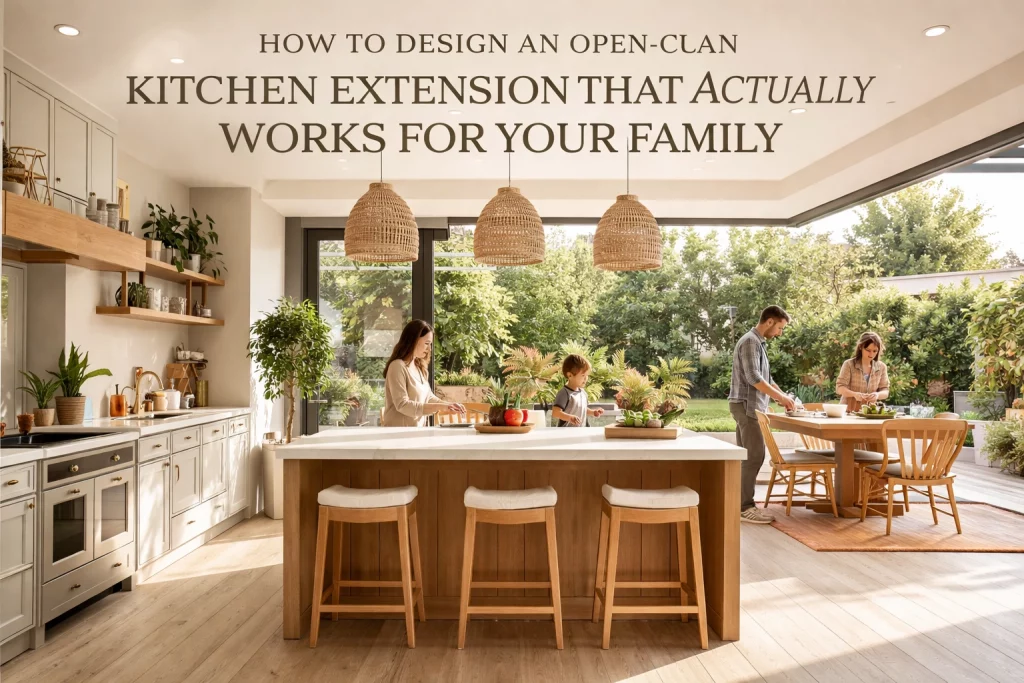
Have you ever scrolled through Pinterest or Instagram, saving those gorgeous open-plan kitchen extensions with the massive islands, the seamless indoor-outdoor flow, and the impossibly tidy worktops? They look incredible. But then you glance over at your own kitchen, the one where the kids do homework while you're trying to cook, where the dog's bed competes for floor space, and where "open-plan" would basically mean chaos visible from every angle.
Here's the thing: those dream kitchens can absolutely become your reality. But creating an open-plan kitchen extension that genuinely works for your family, not just one that looks good for the estate agent photos, requires some thoughtful planning upfront.
Whether you're based in Bournemouth, Poole, or Christchurch, and you're seriously considering extending your home to create that light-filled, sociable kitchen space, this guide will walk you through the practical design decisions that separate a beautiful-but-frustrating extension from one that transforms how your family lives.
Start With How Your Family Actually Lives
Before you get swept up in tile samples and tap finishes, take a step back. The most successful open-plan kitchen extensions are designed around real life, not magazine shoots.
Grab a cuppa, sit down with your household, and ask some honest questions:
- How do you actually use your kitchen right now? Is it purely functional, or is it already the heart of your home?
- What frustrates you most about your current space? Not enough storage? Poor flow? Feeling cut off while you're cooking?
- How do you like to entertain? Casual get-togethers where everyone congregates around the island? Or more formal dinner parties?
- What about the kids? Do they need homework space? Somewhere to play while you prep dinner?
Your answers will shape everything from the layout to the lighting. If you entertain frequently, prioritise an open layout with island seating and clear sightlines to the dining area. If storage is your nemesis, plan for integrated cabinetry, deep drawers, and perhaps even a walk-in pantry. For families craving that indoor-outdoor connection (especially with our lovely Dorset summers), large glass doors that open onto the garden become non-negotiable.
If you're just starting to think about what a kitchen extension might involve, our guide on where to start with a kitchen renovation is a brilliant first step.
Creating Zones Without Building Walls
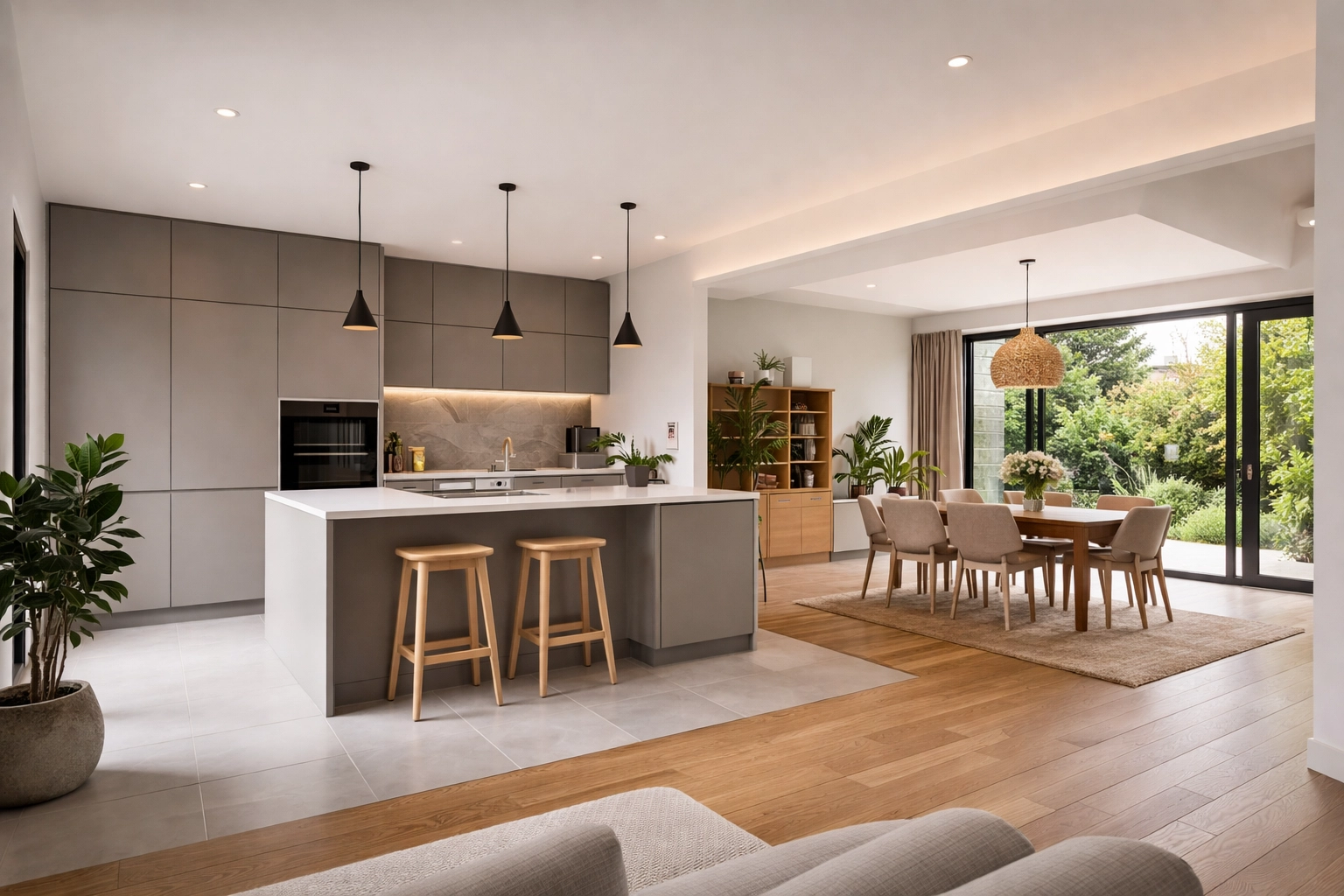
Here's the paradox of open-plan living: you want it to feel spacious and connected, but you also need it to function as distinct areas. Nobody wants cooking smells wafting over to the sofa, or to feel like they're eating dinner in the middle of a building site every evening.
The good news? You can create defined zones without putting up walls that defeat the entire purpose.
Ceiling height changes are a clever architectural trick. Dropping the ceiling slightly over the cooking area, or raising it over the dining space, subtly signals "this is a different zone" without any visual barriers. It's one of those details you might not consciously notice, but your brain absolutely picks up on it.
Flooring transitions work similarly. Perhaps porcelain tiles in the kitchen zone transitioning to engineered wood in the dining and living areas. The materials can complement each other while gently defining where one space ends and another begins.
Furniture placement is your friend too. A strategically positioned sofa, a statement bookshelf, or even a long dining table can act as soft dividers that maintain the openness while creating functional separation.
For more inspiration on making open layouts work beautifully, have a read of our post on the benefits of open concept floor plans.
Let There Be Light (Lots of It)
If there's one thing that can make or break an open-plan kitchen extension, it's natural light. Get it right, and your new space will feel airy, welcoming, and connected to the outdoors. Get it wrong, and you've essentially built an expensive cave.
Generous rear glazing is typically the starting point. Think bi-fold doors, sliding doors, or even a full glass wall that blurs the boundary between inside and out. The goal is to get that glazing reaching as high as possible to flood the space with daylight.
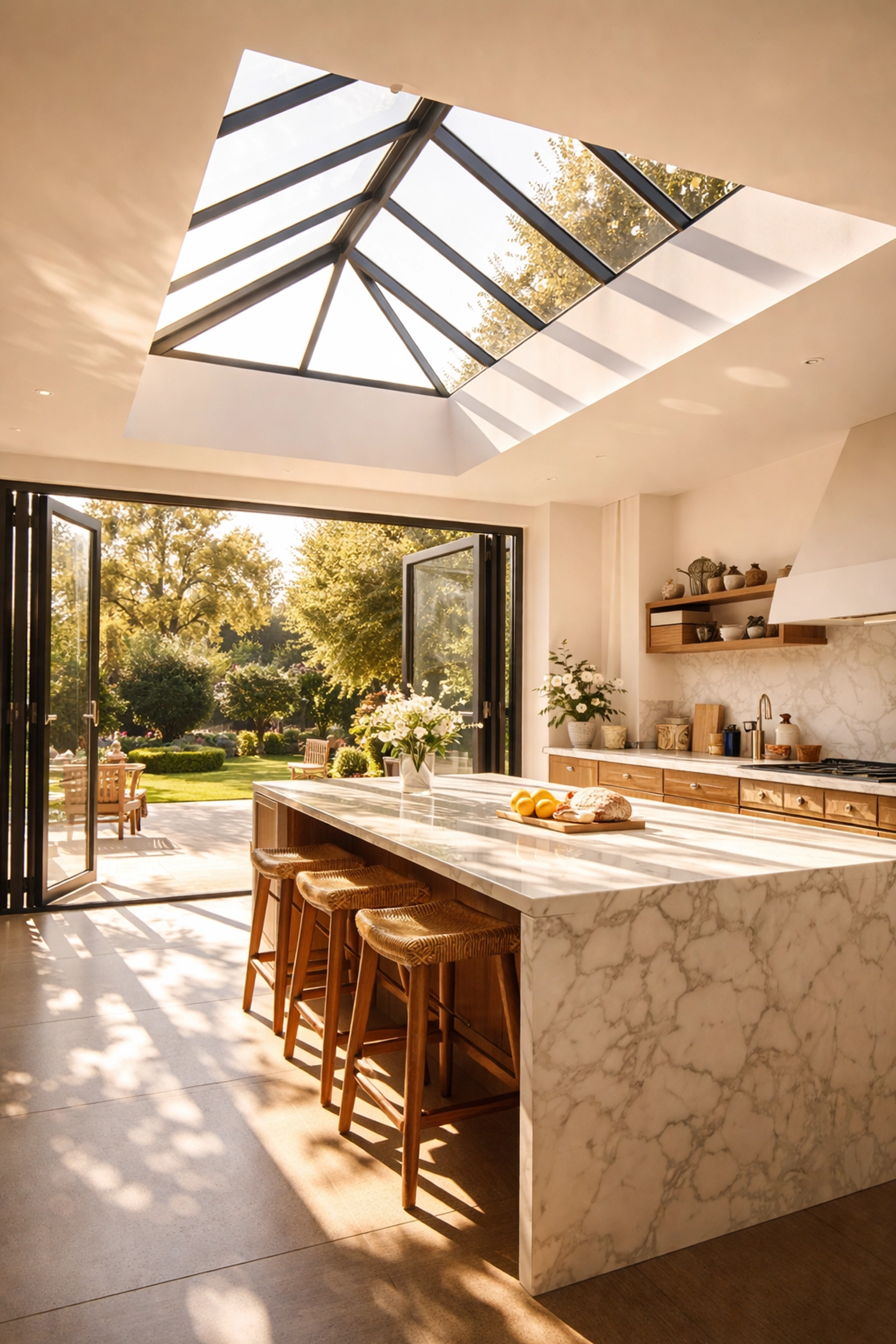
Roof lanterns and skylights are absolute game-changers, particularly for deeper extensions where the centre of the room might otherwise feel gloomy. A well-positioned roof lantern doesn't just provide light, it creates an architectural focal point and can make even a modest extension feel special.
One word of caution though: if your extension faces south, you'll need to think about heat management. Solar control glass or interior blinds prevent your beautiful sunny kitchen from becoming an oven during summer months (and trust us, trying to cook Sunday roast in a greenhouse is nobody's idea of fun).
Our article on the importance of lighting dives deeper into how to layer natural and artificial light effectively.
The Kitchen Island: Your Secret Weapon
In almost every successful open-plan kitchen extension, there's a hero piece: the kitchen island. Done well, it becomes the bridge between your original home and your new extension, pulling everything together into one cohesive space.
But an island isn't just about aesthetics. It's a multi-tasking powerhouse:
- Additional prep space for when one worktop simply isn't enough
- Casual seating for breakfast, homework supervision, or chatting with guests while you cook
- Extra storage underneath for pots, pans, or even a second dishwasher
- A visual anchor that defines the kitchen zone without blocking sightlines
The key is sizing it correctly. Too small and it looks like an afterthought. Too large and it dominates the space and creates awkward traffic flow. As a rough guide, you want at least 1 metre clearance around all sides for comfortable movement.
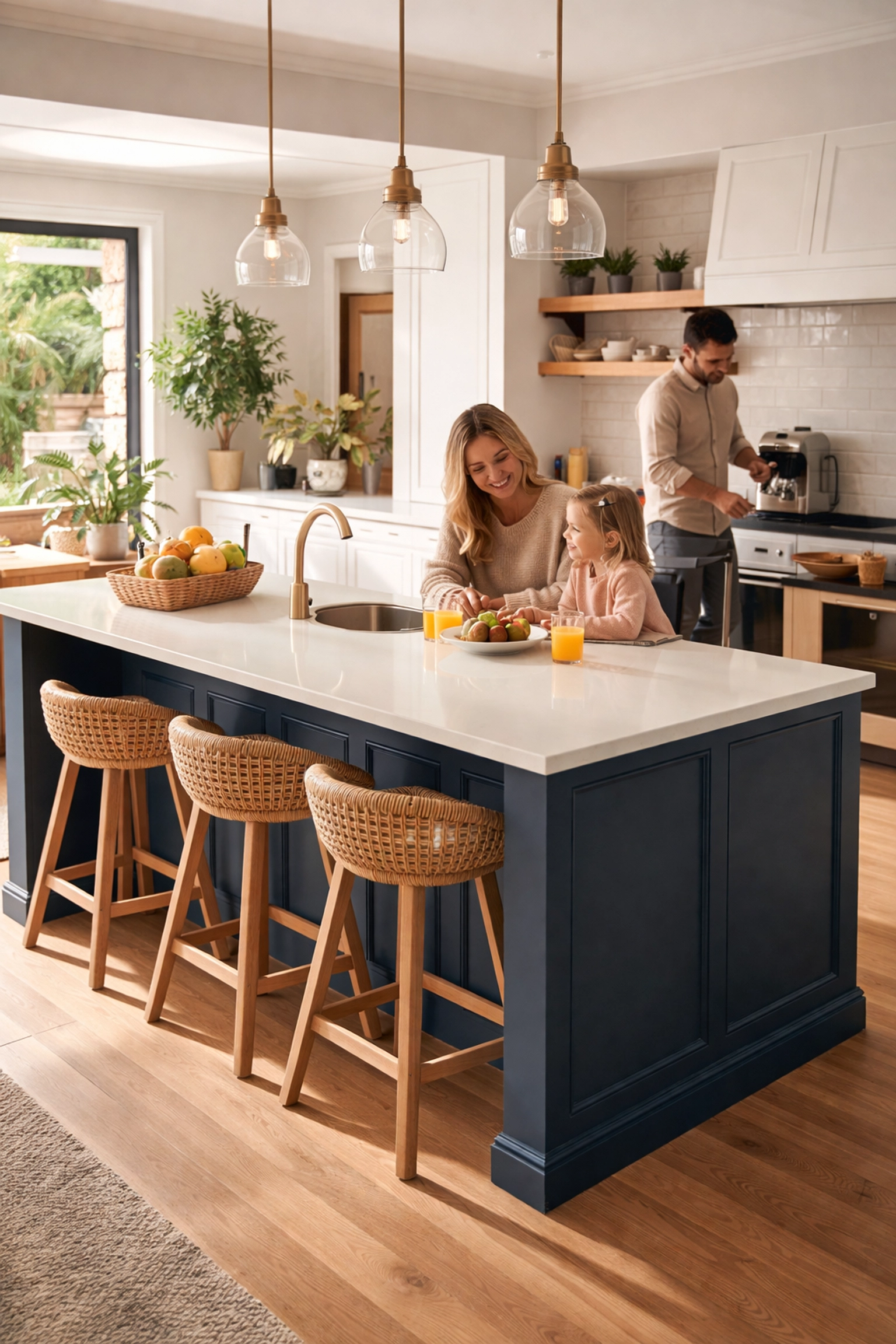
Consider what you want built into your island too. A hob means you can cook while facing your family in the living area (rather than staring at a wall). A sink keeps mess contained to one zone. Or you might prefer to keep the island completely clear as dedicated prep and socialising space.
Storage Solutions That Don't Compromise Style
Here's a common pitfall with open-plan extensions: in pursuit of that clean, minimalist aesthetic, people sacrifice practical storage. Then six months after moving in, every surface is cluttered with appliances, cookbooks, and random bits and bobs that have nowhere to live.
The solution? Get strategic about storage from day one.
Floor-to-ceiling cabinetry works brilliantly, especially along one wall. Yes, it's a big visual statement, but handleless units in a coordinating colour create a streamlined look while hiding an enormous amount of stuff.
A dedicated pantry is worth considering if your layout allows. Whether it's a walk-in room or a tall larder unit, having a designated spot for dry goods, small appliances, and all those ingredients you bought once for a specific recipe keeps your main kitchen clutter-free.
Deep drawers instead of base cupboards are a revelation for pots and pans: no more crawling into cupboards to retrieve that casserole dish from the back.
If you're weighing up the scale of your kitchen project, our comparison of kitchen renovation vs refurbishment might help clarify your options.
Designing for Real-World Workflow
All the beautiful design in the world won't help if your kitchen doesn't function efficiently. Before finalising your layout, think carefully about the "working triangle": the relationship between your hob, sink, and fridge.
These three elements should be positioned so you can move between them easily without obstacles. In an open-plan space, this becomes even more important because you'll likely have family members (or guests, or the dog) moving through while you're cooking.
Consider these practical questions:
- Can you easily move from prep area to hob to sink without crossing a main walkway?
- Is the bin positioned conveniently near both the prep area and the sink?
- Are electrical sockets plentiful and positioned where you'll actually use appliances?
- Have you thought about extraction? Open-plan means cooking smells travel further, so a powerful extractor (whether island-mounted, ceiling-mounted, or downdraft) is essential.
Understanding what problems people encounter with house extensions can help you avoid common workflow mistakes.
Bringing Your Vision to Life
Designing an open-plan kitchen extension that genuinely works for your family isn't about following trends or copying what looks good on social media. It's about understanding how you live, what frustrates you about your current space, and creating a solution tailored to your specific needs.
The families who end up happiest with their extensions are the ones who invested time upfront thinking through these practical considerations: not just the pretty finishes.
If you're ready to start exploring what an open-plan kitchen extension could look like for your Bournemouth, Poole, or Christchurch home, get in touch with our team. We'd love to help you create a space that works as beautifully as it looks.