
Are you dreaming about that extra bedroom, a bigger kitchen, or finally having a proper home office : but the thought of budgeting for it keeps you awake at night? You're not alone. One of the biggest fears homeowners across Bournemouth, Poole, and Christchurch share is the worry that their extension project will spiral out of control financially.
Here's the good news: with a proper cost plan in place, you can avoid nasty surprises and actually enjoy the process of extending your home. No sleepless nights. No panic phone calls from your builder. Just a clear roadmap from start to finish.
Let's walk through exactly how to budget your extension the right way : so you stay in control of your money and your project.
Why Proper Budgeting Changes Everything
Maybe you've heard horror stories from friends or neighbours about extensions that went thousands over budget. Perhaps you've even put off your own project because you're scared the same thing will happen to you.
The truth is, most budget blowouts happen for one simple reason: the budget wasn't realistic in the first place. When you only account for the obvious costs (bricks, labour, a new roof), you leave yourself wide open to "unexpected" expenses that were actually entirely predictable.
A stress-free extension starts with understanding the full picture of what you're paying for : not just the building work itself.
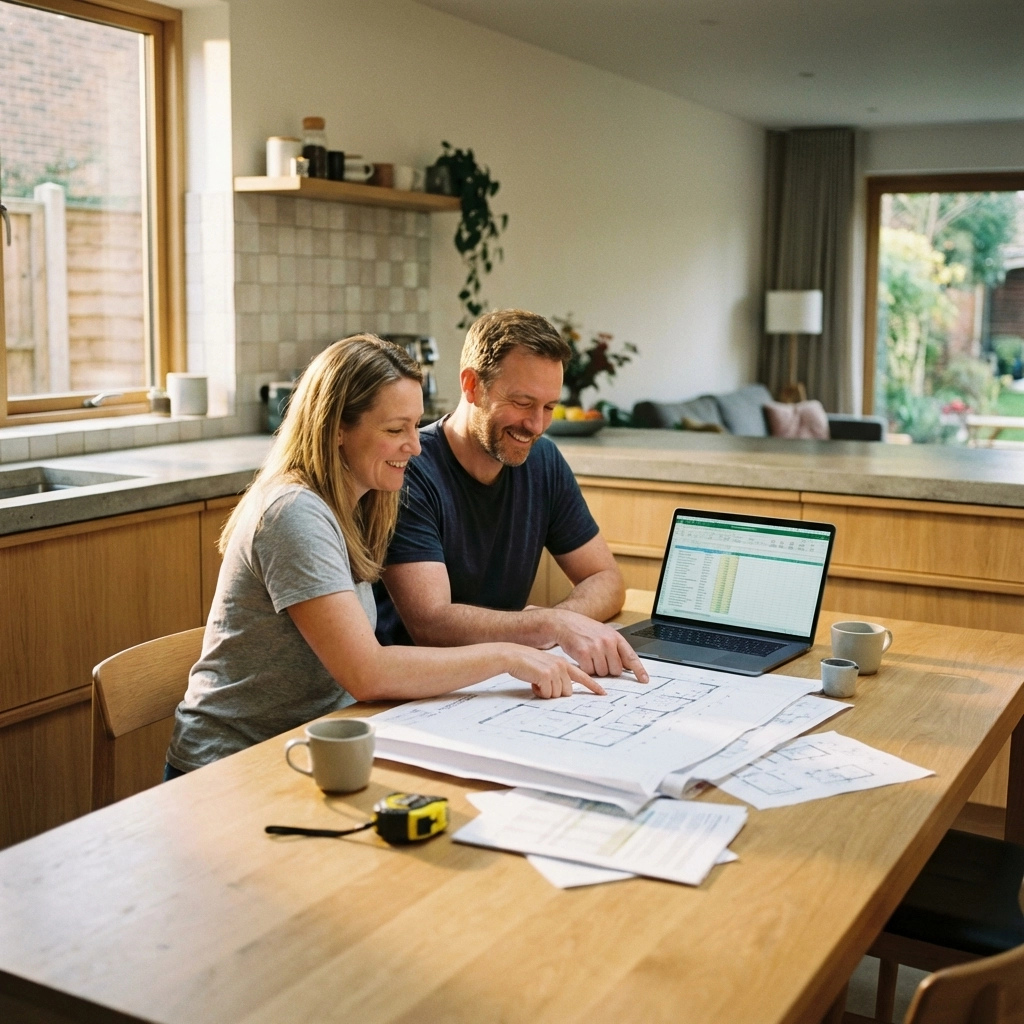
The 7 Budget Categories You Need to Plan For
When you're pricing up a house extension or loft conversion, your costs fall into several key categories. Miss any of these, and you'll find yourself dipping into savings you didn't plan to touch.
1. Design and Professional Fees
Before a single brick is laid, you'll likely need architectural drawings, structural engineer calculations, and possibly planning consultants. These fees typically run between 7–15% of your total build cost, depending on the complexity of your project.
For a straightforward single-storey extension, you might get away with a simpler package. A more complex loft conversion with dormers or structural changes? Budget for more professional input upfront.
2. Planning and Building Regulations
Not every extension needs full planning permission : many fall under permitted development rights. But you'll still need to comply with Building Regulations, which means inspection fees and approval costs.
If your project does require planning permission (common with loft conversions that alter your roofline), factor in application fees and any specialist reports your council might request.
3. Site Preparation and Groundwork
This is where many budgets start to wobble. Foundations, drainage, demolition of existing structures, and ground conditions all affect costs significantly. If you're building on clay soil or near trees, your foundations may need to go deeper : and that means more money.
4. Construction and Labour
The main event. In the UK, single-storey extensions typically cost between £1,500–£2,500 per square metre, while loft conversions range from £1,200–£2,000+ per square metre depending on the type (Velux, dormer, or hip-to-gable).
Labour rates vary by region, and here in Dorset, you'll find costs are generally lower than London but comparable to other southern counties. Getting multiple quotes is essential : more on that shortly.
5. Fixtures, Fittings, and Finishes
Kitchens, bathrooms, flooring, lighting, doors, skirting boards, paint : the finishing touches can easily account for 15–25% of your total spend. This is also where specification choices make a massive difference to your final bill.
6. Utilities and Services
Extending your electrics, plumbing, heating, and possibly gas supply into a new space isn't free. Don't forget potential upgrades to your consumer unit or boiler if your existing systems can't handle the extra load.
7. External Works
Landscaping, patios, fencing, and making good your garden after the builders leave : these often get forgotten until the end, when they feel like an unwelcome extra expense.
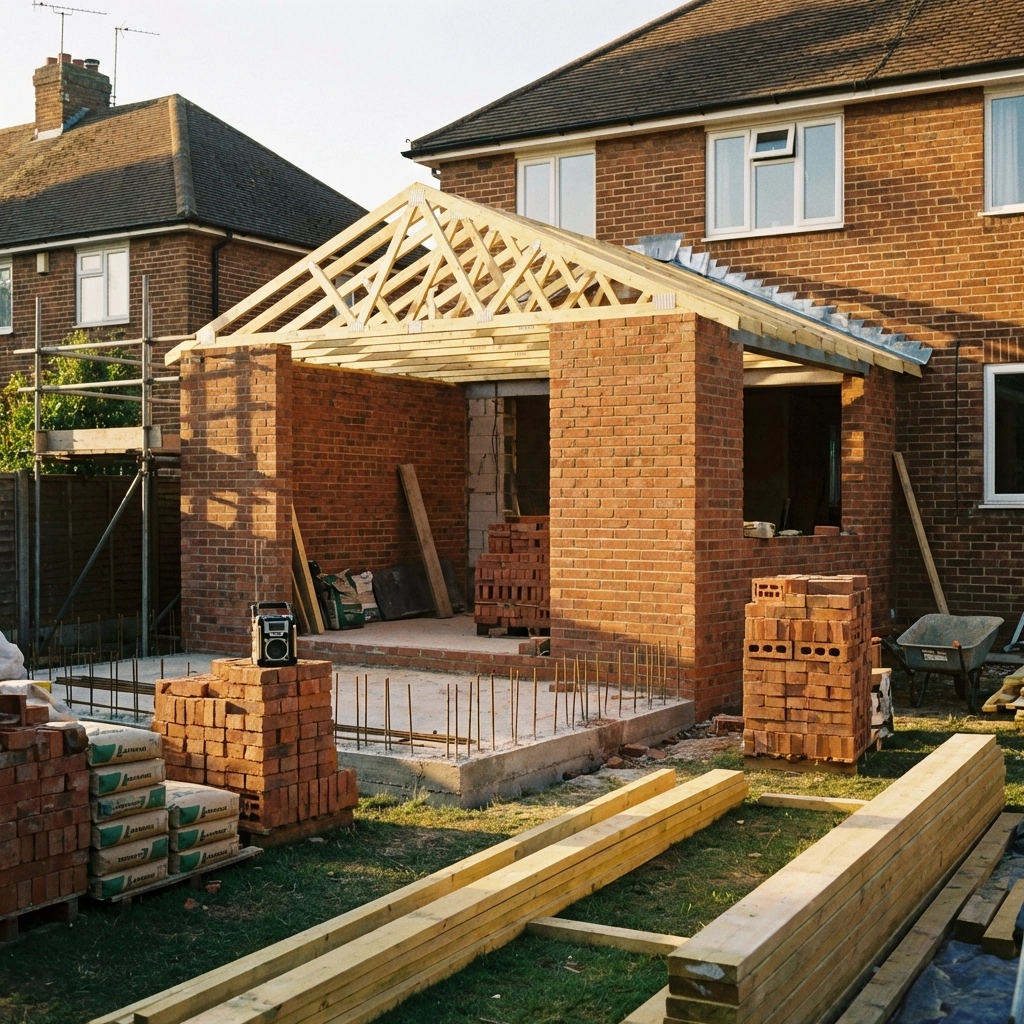
The Golden Rule: Build in a Contingency Fund
Here's something every experienced builder will tell you: set aside 10–15% of your total budget as a contingency fund.
Why? Because even with the best planning, surprises happen. You might discover dodgy drains when digging foundations. The plaster might come off the wall and reveal damp that needs treating. A material you specified might be discontinued mid-project.
Your contingency fund isn't "extra" money : it's part of your real budget. If you don't need it (lucky you!), it's a bonus. But if you do need it, you'll be grateful it's there.
A quick example: If your extension budget is £50,000, set aside £5,000–£7,500 as contingency. Your "spending" budget is then £42,500–£45,000 for the planned works.
Ready to get a clearer picture of costs? Try our free House Extension Calculator or Loft Conversion Calculator to see ballpark figures for your project.
Specification Choices: Where You Control the Budget
One of the most empowering parts of budgeting is realising how much control you have over the final number. Your specification choices : the materials, finishes, and fittings you select : can swing your costs by tens of thousands of pounds.
Lower-cost choices:
- Standard uPVC windows and doors
- Laminate flooring
- Basic kitchen units and worktops
- Standard radiators and lighting
Higher-cost choices:
- Aluminium bi-fold doors
- Engineered oak flooring
- Bespoke kitchen with stone worktops
- Underfloor heating and designer lighting
Neither is "right" or "wrong" : it depends on your priorities and budget. The key is being honest with yourself about what you can afford before you fall in love with the premium options.

Get Multiple Quotes (And Compare Apples to Apples)
Never accept the first quote you receive. Get at least three detailed quotes from reputable builders so you can compare like-for-like.
When reviewing quotes, check:
- Is everything itemised, or is it a vague lump sum?
- Are materials specified, or left open?
- What's included vs. excluded (scaffolding, skips, building regs fees)?
- What's the payment schedule?
A suspiciously cheap quote often means something's been left out : or corners will be cut. A detailed, transparent quote gives you confidence and protection.
How Fixed-Price Contracts Eliminate Budget Anxiety
Here's where things get really interesting for your peace of mind.
Traditional "cost-plus" or day-rate arrangements mean you're essentially writing blank cheques. If the job takes longer or materials cost more, you pay more. Simple as that : and stressful.
A fixed-price contract, on the other hand, locks in your total cost upfront. The builder takes on the risk of overruns, not you. You know exactly what you're paying from day one, and there are no nasty surprises at the end.
At The Big Conversion Company, we offer fixed-price quotes on our extension and loft conversion projects across Bournemouth, Poole, and Christchurch. That means the price we agree is the price you pay : full stop.
Want a fixed-price quote for your project? Get in touch with our team for a free, no-obligation chat about your extension or loft conversion.
Phasing Your Project to Match Your Finances
If your dream extension feels financially out of reach right now, consider phasing the work. You might:
- Complete the structural build now and fit out the interior later
- Do a simpler extension first, then add a loft conversion in a year or two
- Prioritise the essentials and upgrade finishes over time
Phasing lets you spread costs and avoid stretching yourself too thin. A good builder will help you plan this sensibly.
Your Budget Checklist: A Quick Summary
Before you commit to any extension or loft conversion, make sure you've accounted for:
- Design and professional fees
- Planning and Building Regulations costs
- Site preparation and groundwork
- Construction and labour
- Fixtures, fittings, and finishes
- Utilities and services
- External works and landscaping
- 10–15% contingency fund
Tick all those boxes, and you're in a strong position to move forward with confidence.
Ready to Start Planning Your Extension?
Budgeting doesn't have to be scary. With a clear cost plan, realistic expectations, and the right building partner, you can transform your home without the financial stress.
If you're thinking about an extension or loft conversion in Dorset, we'd love to help you get started. Our team can walk you through the numbers, discuss your options, and give you a fixed-price quote so you know exactly where you stand.
Book a free consultation or explore our pricing guide to take the first step toward your dream home ( with zero budget surprises.)