
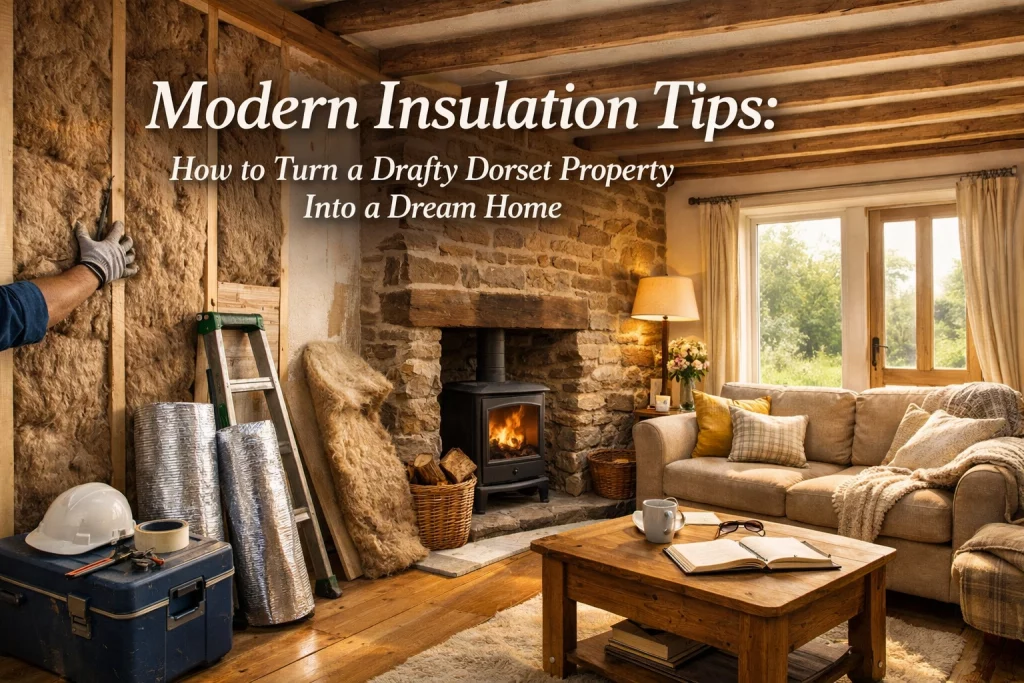
Are you tired of wearing three layers of wool just to sit in your own living room? Does a gust of wind off the Bournemouth coast seem to find its way through your front door no matter how much you turn up the thermostat? If you are starting to feel like your home is more of a wind tunnel than a sanctuary, you aren't alone. Many homeowners across Poole, Christchurch, and the wider Dorset area struggle with properties that simply weren't built with modern energy efficiency in mind.
Living in a drafty home isn’t just uncomfortable; it’s expensive. With energy prices remaining a significant part of the household budget in 2026, heat escaping through thin walls or a poorly insulated roof is essentially money flying out of the window. The good news is that turning a "fridge-like" house into a cozy, energy-efficient dream home is entirely achievable through a strategic approach to modern insulation.
Start Small: The Power of Draught Proofing
Before you dive into major structural changes, it is worth looking at the smaller culprits. If you’ve ever felt a literal breeze while sitting on the sofa, you’ve experienced the impact of poor sealing. Draught proofing is one of the most cost-effective ways to retain heat, and in older Dorset properties, it can reduce heat loss by up to 20%.
Focus your efforts on the internal doors that lead to unheated areas, such as your garage or the attic. If you’re planning a garage conversion, this is an especially important detail, because the jump from “cold storage space” to “everyday living space” only feels comfortable when the new walls, floor, and ceiling insulation are paired with proper air-tightness. Sealing the gaps around windows, floorboards, and even letterboxes can make an immediate difference in how a room feels. It is the "quick win" of home renovation that sets the stage for more substantial improvements.
Elevating Your Comfort: The Loft and Roof
In the world of home renovation, the roof is often the biggest offender when it comes to heat loss. Since heat rises, an uninsulated or poorly insulated loft acts like a chimney, sucking the warmth right out of your living spaces.
If you are considering a loft conversion, insulation isn't just a "nice to have": it’s a building regulation requirement, and it’s one of the biggest reasons loft conversions can feel noticeably cosier than the rooms below. To meet current 2026 standards, you should aim for a loft insulation thickness of at least 270mm. This doesn't just keep you warm in the winter; it also prevents your home from turning into an oven during those increasingly warm Dorset summers.
Modern insulation materials have come a long way. While traditional mineral wool is still a staple, we are seeing more homeowners opt for high-performance rigid foam boards or even eco-friendly alternatives like sheep’s wool or hemp. These materials offer incredible thermal resistance without the bulk, which is particularly useful if you are trying to maximize head height in a new loft room.
The Challenge of Solid Walls
Many of the beautiful character properties in areas like Christchurch and Southbourne were built with solid walls. Unlike modern cavity walls, which have a handy gap in the middle that can be filled with insulation, solid walls are essentially a single layer of brick or stone. These can lose up to a third of your household heat.
To fix this, we look at internal wall insulation. By fitting high-quality insulation boards to the inside of your external walls, we can create a thermal barrier that keeps the heat exactly where it belongs.
However, Dorset’s coastal climate brings its own challenges: specifically moisture. In these cases, we recommend "vapor-open" insulation methods. These allow the walls to breathe and dry naturally, preventing the damp issues that can sometimes plague older buildings when they are sealed too tightly. It’s a technical balance, but getting it right means your home stays dry, healthy, and warm.
Building Better: Extensions and New Spaces
If you’re at the stage where you’ve officially outgrown your current layout, you’re likely looking at a house extension. This is actually the perfect opportunity to address your home's overall efficiency, because you can build insulation in from day one (rather than trying to “patch” cold spots later).
When we design a modern extension, we aren't just adding square footage; we are adding a highly insulated "hub" to your home. Modern building codes are stricter than ever, meaning your new kitchen-diner or extra bedroom will likely be the warmest part of the house. By using high-performance floor insulation and advanced glazing, a new extension can actually help regulate the temperature of the rest of the ground floor.
If you are curious about how a new, well-insulated space might fit into your budget, our house-extension-calculator is a great place to start. It helps you balance the practical costs of construction with the long-term value of a more efficient home.
Don't Forget the Floors
We often focus on the walls and the roof, but an average household can lose up to 8% of its heat through uninsulated floors. If you have a suspended timber floor (common in Victorian and Edwardian Dorset homes), you might literally be losing heat into the dirt beneath your house.
During a home renovation, lifting the floorboards to install mineral wool or rigid insulation between the joists is a game-changer. If you have solid concrete floors, we can use slim, high-density insulated underlays beneath your choice of flooring. Not only does this save you money on your heating bill, but it also makes the floor much more comfortable for bare feet on a chilly March morning.
Modern Materials: Beyond the Basics
In 2026, the variety of insulation materials available to us is impressive. We no longer have to rely on itchy glass fiber. Here are a few modern options we often discuss with our clients:
- PIR Boards: High-performance rigid foam that provides excellent insulation with minimal thickness. Ideal for lofts and extensions where space is at a premium.
- Sheep’s Wool: A fantastic natural insulator that is breathable, sustainable, and even helps to purify the air inside your home.
- Recycled Cellulose: Made from recycled paper, this is an eco-friendly way to blow insulation into hard-to-reach nooks and crannies.
- Aerogel: A space-age material that is incredibly thin but offers the highest level of thermal protection. It’s expensive, but for specific "cold spots" in a renovation, it’s a lifesaver.
Financial Support and Grants
Transforming a drafty property is an investment, but you might not have to shoulder the entire cost yourself. The UK government continues to support energy efficiency through schemes like the Great British Insulation Scheme and ECO4.
These grants are often available to households in specific Council Tax bands or those meeting certain income criteria. They can cover everything from loft insulation to more complex wall treatments. It is always worth checking your eligibility before starting a project, as these funds can significantly offset your initial renovation costs.
A Holistic Approach to Your Dream Home
Insulation is only one part of the puzzle. To truly turn a drafty property into a dream home, you need to think about how your heating system, ventilation, and insulation work together. A perfectly insulated house that has no ventilation will quickly suffer from condensation and mold. Conversely, a brand-new boiler in a house with no loft insulation is like trying to fill a bucket with a hole in the bottom.
When we work on current and completed projects across Bournemouth and Poole, we look at the house as a single system. We ensure that as we tighten up the insulation, we are also maintaining healthy airflow and efficient heat distribution.
Ready to Stop the Shivering?
If you’ve had enough of the drafts and the sky-high energy bills, it’s time to take action. Whether you are planning a full-scale loft conversion to add space and warmth, or you want to discuss how a modern extension could transform your living experience, we are here to help.
At The Big Conversion Company Ltd., we specialize in taking older Dorset properties and bringing them firmly into the 21st century. We understand the local architecture, the coastal climate, and the specific challenges of renovating in this beautiful part of the country.
Don't spend another winter dreading the draft. You can contact us today for a professional consultation, or use our price page to get a better idea of how we can help turn your drafty house into the warm, comfortable, and energy-efficient dream home you deserve.