
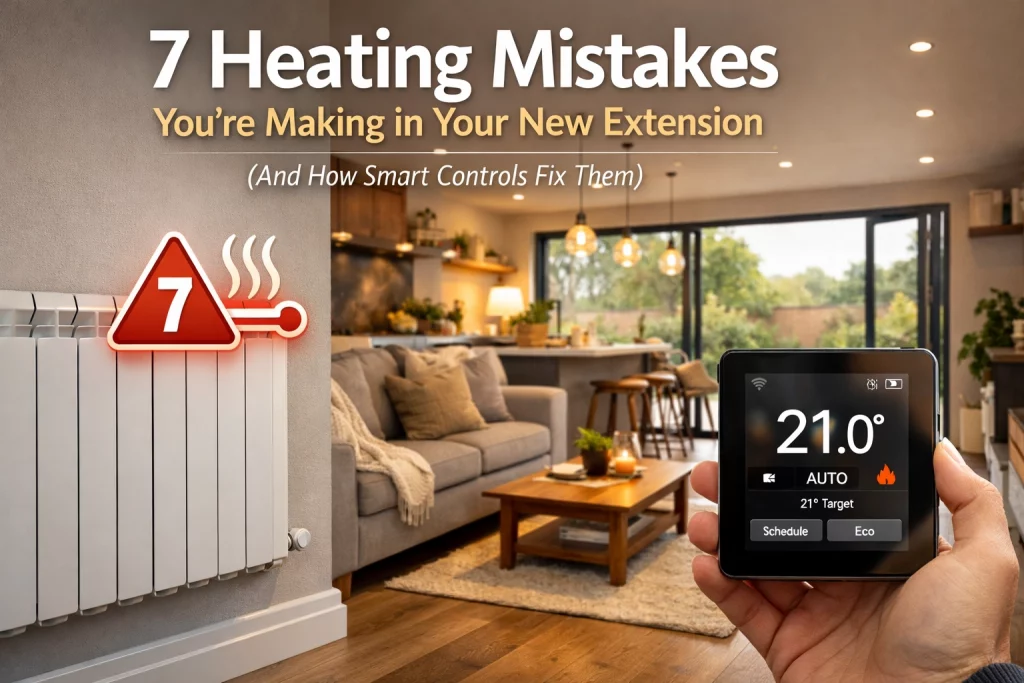
Are you starting to feel like your home is finally becoming the space you always dreamed of, only to realise that your brand-new extension feels like an ice box in the winter and a greenhouse in the spring? Maybe you’ve added to your family or finally built that sun-drenched kitchen-diner you’ve wanted for years, but the "comfort" part of the equation is missing.
If you’re considering or currently finishing a house extension in Bournemouth, Poole, or Christchurch, you’ve likely focused on the layout, the flooring, and the bi-fold doors. But here’s a direct and honest truth: most homeowners treat heating as an afterthought. By the time the paint is dry, they’ve already made critical errors that lead to skyrocketing energy bills and a room that’s never quite the right temperature.
In the current 2026 market, energy efficiency isn't just a buzzword: it’s a financial necessity. Here are the seven biggest heating mistakes we see in new extensions and how modern smart controls can fix them before they cost you a fortune.
1. The "One Zone" Trap
Perhaps the most common mistake is simply "teeing off" your existing central heating and expecting it to work perfectly. Your new extension is built with modern insulation standards, meaning it retains heat differently than the rest of your 1930s semi or Victorian terrace.
If your thermostat is in the hallway of the main house, it has no idea what’s happening in the extension. Your hallway might be chilly, keeping the boiler running, while your well-insulated extension becomes uncomfortably hot. Conversely, if the main house is warm, the extension might never get the heat it needs.
The Smart Fix: Smart zoning. By installing smart thermostatic radiator valves (TRVs) or independent zone controllers for underfloor heating, you treat the extension as its own ecosystem. You only heat the space when you’re using it, independently of the rest of the house.
2. Guessing the Heat Load
We often see homeowners choose a radiator based on how it looks rather than how it performs. Or worse, they assume a small patch of underfloor heating will be enough to warm a massive vaulted-ceiling room. If the heating system is undersized, it will run constantly, wearing out your boiler and failing to reach a comfortable temperature.
In 2026, with energy prices still a major consideration for households across Dorset, running an inefficient system is like burning money in your garden.
The Smart Fix: Before you buy, use a house extension calculator to understand the scale of your project, and ensure your installer performs a proper BTU (British Thermal Unit) calculation. Smart controls can then "learn" the thermal profile of your room, adjusting how early the heat comes on based on how quickly the room actually warms up.
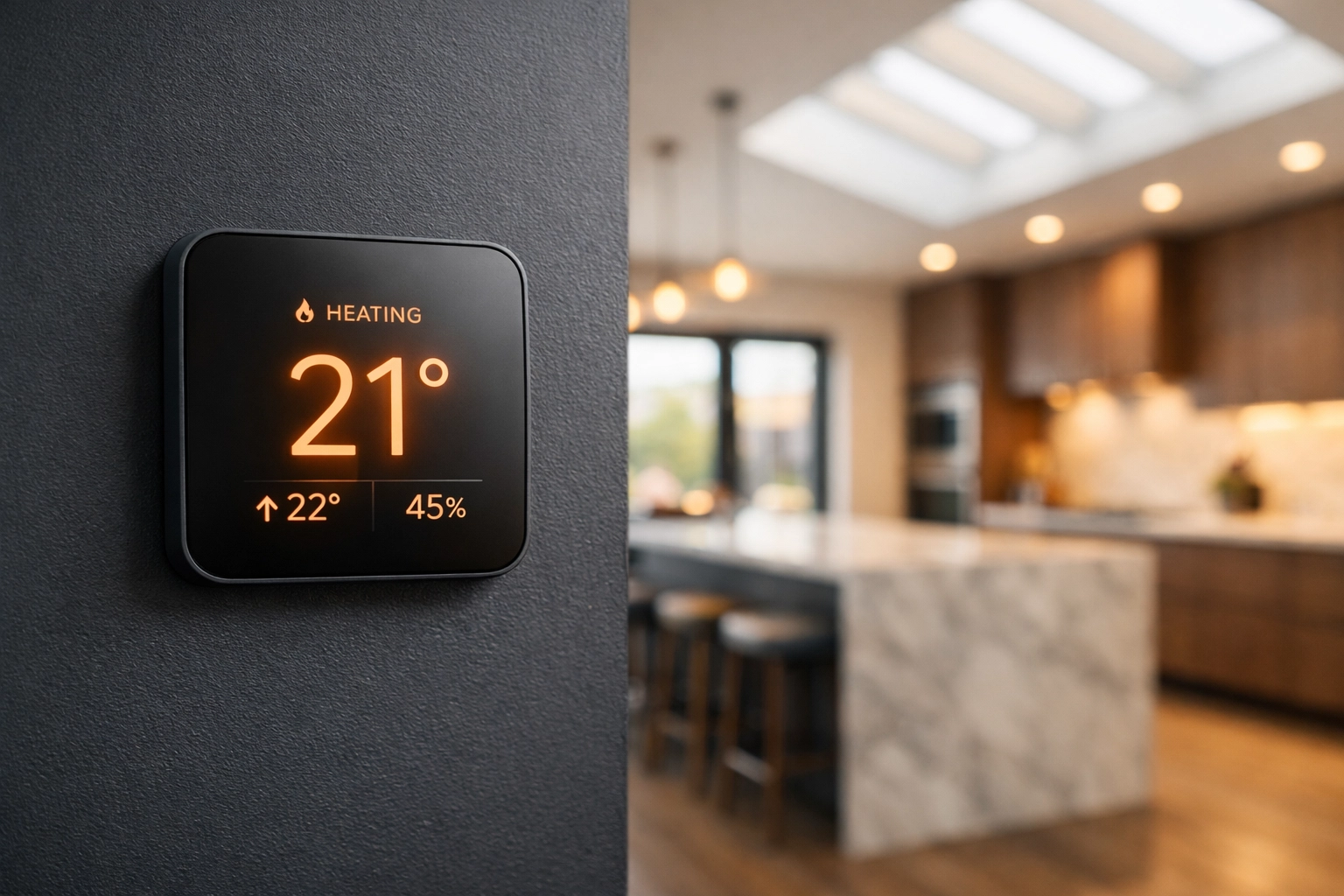
Alt text: A modern wall-mounted smart thermostat displaying energy usage and temperature zones in a newly renovated home extension.
3. Terrible Thermostat Placement
If you’ve placed your thermostat right next to those beautiful new bi-fold doors or in direct sunlight from a skylight, you’ve made a tactical error. The sensor will "think" the room is much warmer than it actually is, shutting off the heat while you’re still shivering on the sofa. Similarly, placing it in a draughty corner near a door will have the opposite effect, sending your energy bills through the roof.
The Smart Fix: Wireless smart sensors. Unlike old-fashioned wired thermostats, modern smart sensors can be placed anywhere. You can even have multiple sensors that average the temperature of the room, ensuring the "comfort zone" is where you actually sit, not just where the wires happened to be.
4. Ignoring the "Smart Home" Value Boost
If you’re building an extension, you’re likely doing it to add value to your property. In the 2026 property market, buyers are tech-savvy and eco-conscious. A home with a "dumb" heating system is seen as a project; a home with fully integrated smart controls is seen as a premium, move-in-ready asset.
Neglecting to install smart controls during the build phase is a missed opportunity to boost your property's EPC (Energy Performance Certificate) rating.
The Smart Fix: Professional installation of brands like Tado, Nest, or Hive during the construction phase. It’s significantly cheaper to integrate these systems while the walls are open than to retro-fit them later. When you eventually look at your price page for future renovations or a sale, that investment will pay for itself in buyer appeal.
5. Manual Overrides and "Set and Forget" Fatigue
We’ve all done it: you feel a bit chilly, so you crank the thermostat up to 25°C, intending to turn it down in an hour. Three hours later, you’re sweating, and the boiler has been running at full tilt for no reason. In a large extension, this level of waste is magnified.
The Smart Fix: Geofencing and scheduling. Smart controls use your phone’s location to know when you’ve left the house. If you’ve headed out to Bournemouth beach for the afternoon and forgotten to turn the heating off in the extension, the system will automatically drop to an "eco" temperature. It’s ease of use that actually saves you money.
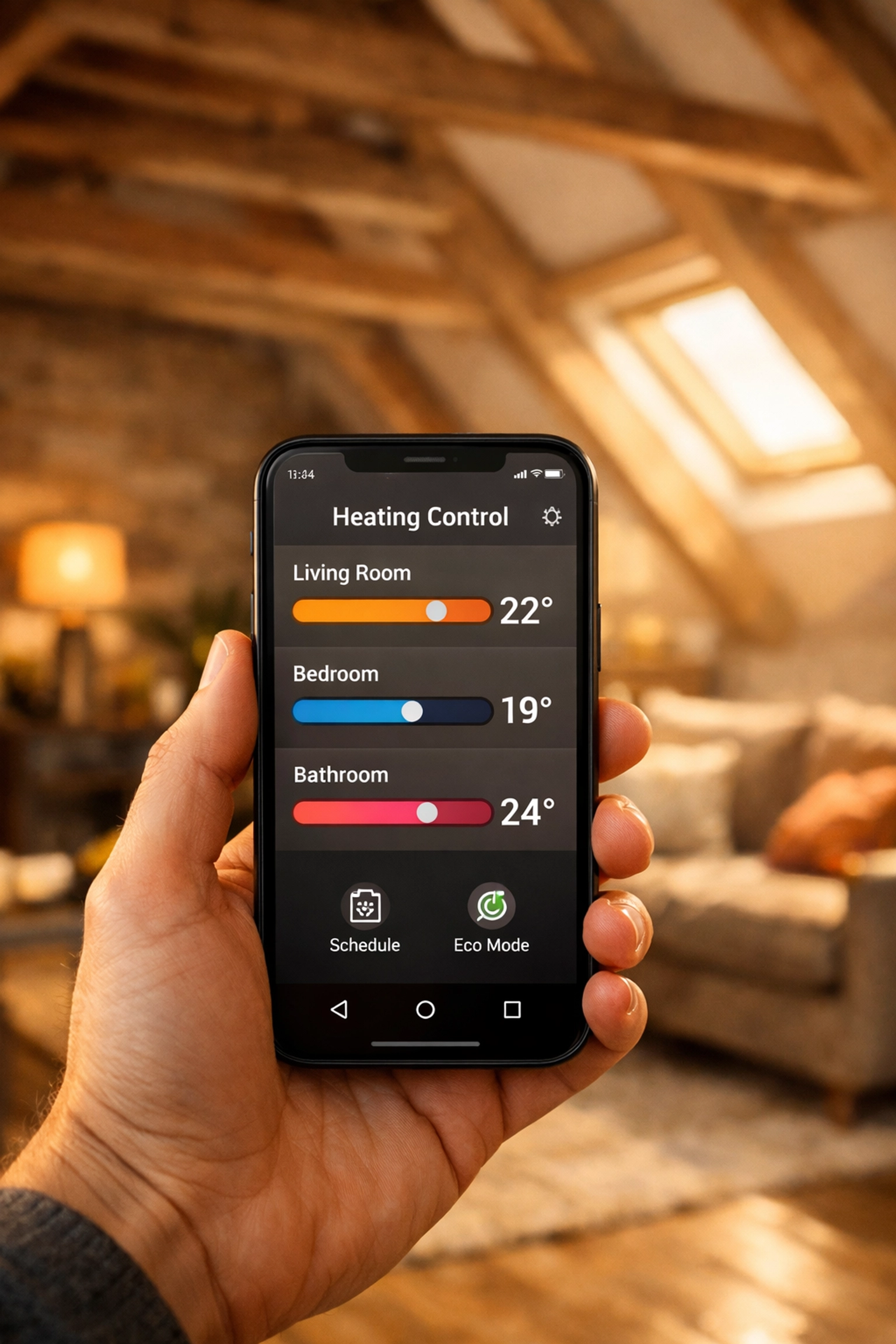
Alt text: A homeowner using a smartphone app to adjust the heating schedule for their loft conversion and ground floor extension.
6. Stressing Your Existing Boiler
Your current boiler was likely sized for the original footprint of your home. When you add a large loft conversion or a rear extension, you are asking that boiler to work much harder. If you don't manage the flow of heat, you risk a total system failure during the coldest week of the year.
The Smart Fix: Modulating controls. Rather than just being "on" or "off," smart controls can talk to your boiler (using protocols like OpenTherm) to tell it exactly how much heat is needed. Instead of firing at 100% capacity to move the temperature up by half a degree, the boiler can "tick over" efficiently, extending its lifespan and reducing your carbon footprint.
7. Over-Complicating the Tech
There is a fear that "smart" means "difficult." We see many homeowners stick to old-fashioned dials because they are afraid they won't be able to work the new system, or that it will be a nightmare to install. This is a mistake because modern systems are actually designed to be simpler than the clunky plastic timers of the 1990s.
The Smart Fix: Choose a system with a high-quality interface. Most smart controls in 2026 are "plug and play." For us at The Big Conversion Company Ltd., we focus on ensuring that your home renovation includes technology that works for you, not against you. Installation usually takes less than an hour for a professional, and the apps are as intuitive as checking the weather.
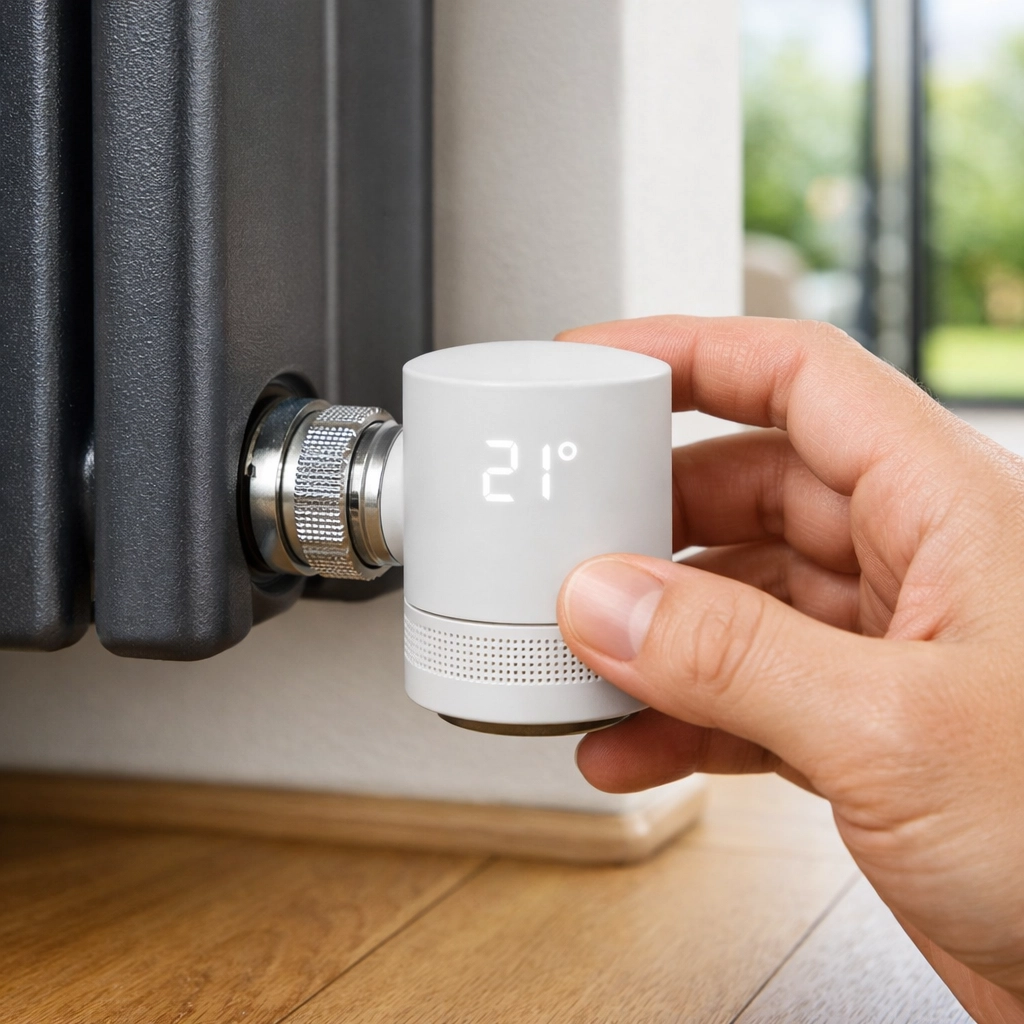
Alt text: Close-up of an easy-to-use smart radiator valve being adjusted by hand in a contemporary home.
Why This Matters in 2026
The landscape of home ownership has changed. We are no longer just looking for "more space"; we are looking for "smarter space." Whether you are finishing a garage conversion or a massive double-storey extension, the way you heat that space dictates your daily comfort and your monthly outgoings.
At The Big Conversion Company Ltd., we’ve seen how the right heating strategy transforms a room from a "nice addition" into the heart of the home. Don’t let poor planning turn your investment into a financial drain.
If you’re based in Bournemouth, Poole, or the surrounding areas and you’re worried about the technical side of your upcoming project, we are here to help. We don’t just build walls; we build efficient, modern living spaces.
Ready to plan your next move?
Check out our house extension calculator to get a clear picture of your project costs, or contact us today to discuss how we can make your new extension the most comfortable room in the house.
Choosing the right heating isn't just about pipes and radiators; it's about making sure that when you step into your new space, it feels exactly like home should: perfectly warm, effortlessly controlled, and incredibly efficient.