
Have you ever walked into someone's home and felt like their extension just flows into their garden? That magical feeling where you can't quite tell where the inside ends and the outside begins? That's not an accident: it's clever design.
If you're planning a house extension in Bournemouth, Poole, or Christchurch, getting that seamless indoor-outdoor connection can completely transform how you use your home. Instead of your extension feeling like a separate box tacked onto your property, it becomes a natural bridge between your living space and your garden.
The good news? You don't need a mansion or a massive budget to achieve this. Here are 15 practical ways to connect your new extension to your garden beautifully.
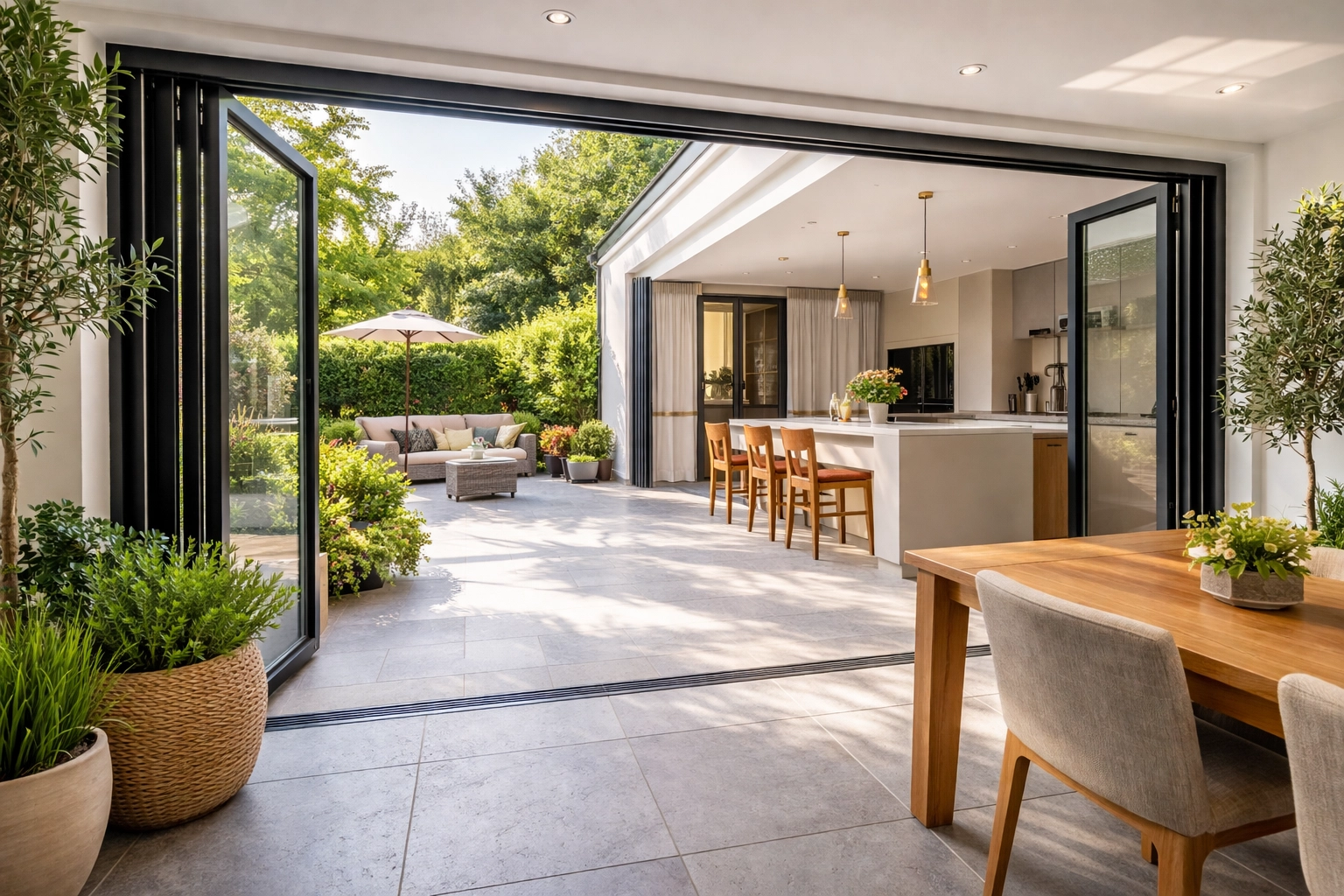
1. Go Big with Sliding or Bi-Fold Doors
This one's a game-changer. Large sliding glass doors or bi-fold doors don't just let in light: they essentially make your wall disappear on warm days. When fully opened, your kitchen or living room spills directly onto your patio, creating one continuous entertaining space.
For Dorset homes where we get those glorious summer evenings, this is an investment that pays off in lifestyle dividends every single year.
2. Match Your Interior and Exterior Flooring
Here's a trick that interior designers swear by: use the same flooring material (or something visually similar) inside your extension and on your patio or decking area directly outside.
When the same stone tiles or similar-toned slabs run from your kitchen right through to your outdoor courtyard, your eye doesn't register a boundary. It reads as one continuous space, making both areas feel significantly larger.
3. Install Floor-to-Ceiling Windows
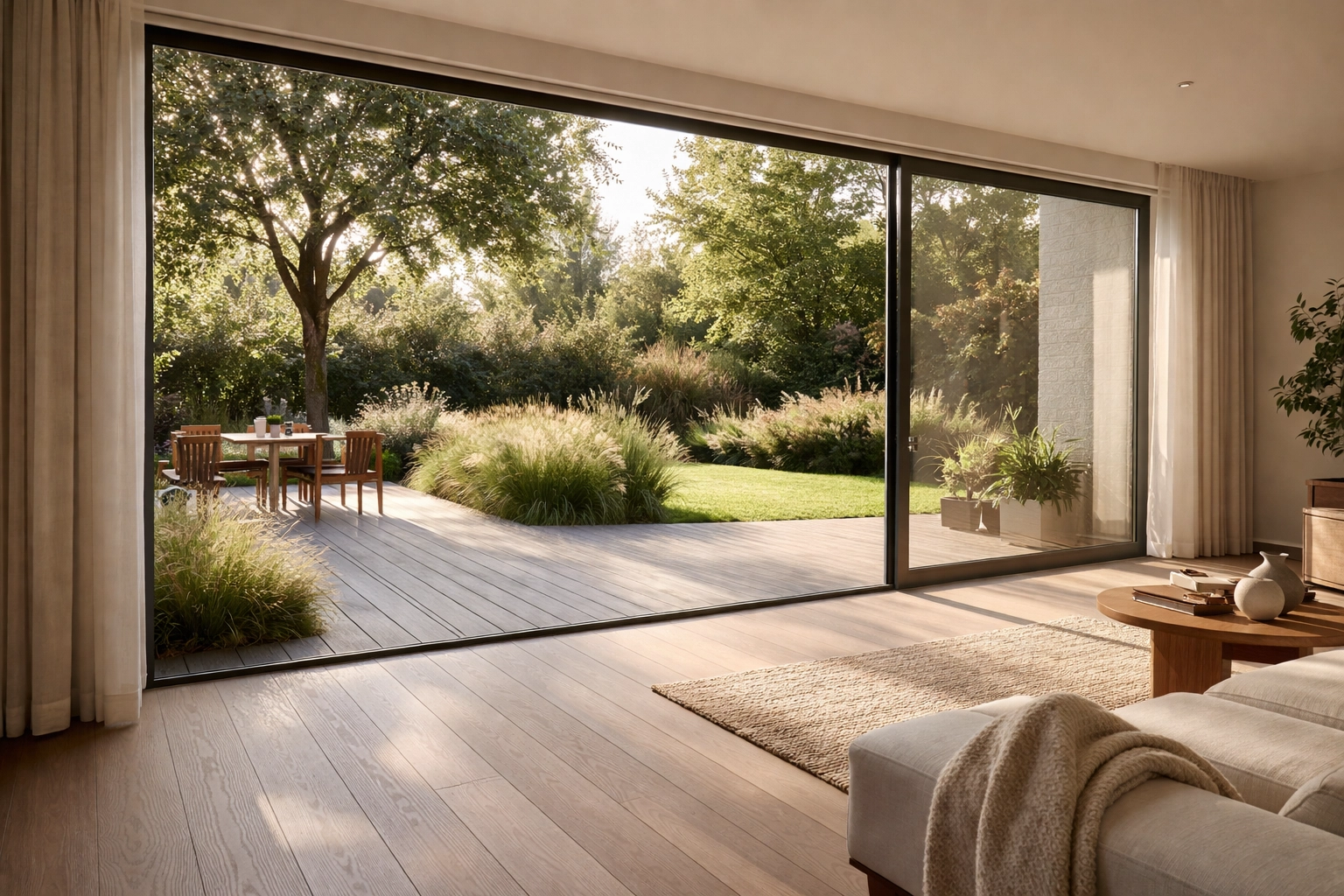
If bi-fold doors aren't practical for every wall, floor-to-ceiling windows are a brilliant alternative. They frame your garden like a living piece of art and flood your extension with natural light.
Position them strategically to capture your best garden views: whether that's a mature tree, a flower bed, or simply the sweep of your lawn.
4. Create a Covered Outdoor Area
A pergola, veranda, or simple overhang directly outside your extension creates a transitional zone that's neither fully inside nor fully outside. It's perfect for those classic British moments when you want fresh air but the clouds look threatening.
This covered space becomes an extension of your extension (if you will), giving you somewhere to sit with a cuppa even when the weather's being unpredictable.
5. Design a Level Threshold
Nothing kills indoor-outdoor flow quite like a chunky step or raised threshold between your extension and garden. Where possible, design your extension so the floor level meets your patio or decking flush.
This not only looks cleaner but is also more practical for moving furniture, carrying food outside, and accessibility for everyone in your family.
6. Add Strategic Planting Near the Doorway
Soften the transition between your extension and garden by positioning plants both just inside and just outside your main doors. A few potted plants inside the entrance and some leafy shrubs or ornamental grasses outside create a gentle visual bridge.
This works especially well if you have a view from your extension that currently looks onto bare paving or a fence: plants instantly warm it up.
7. Use Consistent Colour Palettes
If your extension interior features neutral tones, carry those colours through to your outdoor furniture, planters, and even the choice of paving. When everything feels cohesive, the boundary between inside and out becomes less obvious.
Think soft greys, natural woods, and earthy greens that complement both your kitchen units and your garden furniture.
8. Frame Your Views Intentionally
Before finalising your extension plans, think carefully about what you'll actually see through each window and door. There's no point having a stunning glass wall if it looks directly at your neighbour's shed or a bare retaining wall.
Work with your designer to position openings where they'll capture planting, trees, or the best angles of your garden. Sometimes shifting a window by just a metre makes all the difference.
9. Install Skylights or Roof Lanterns
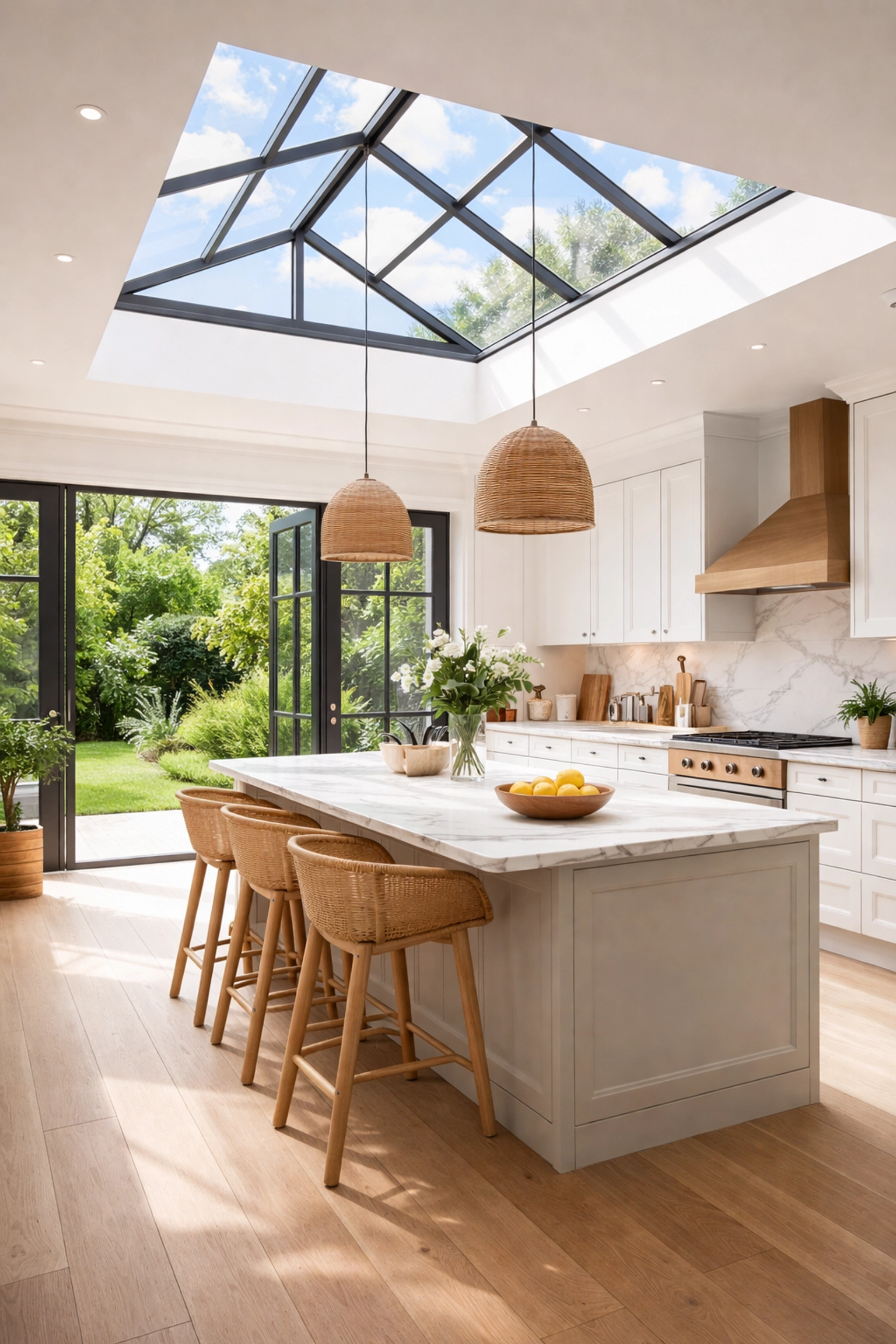
Bringing light in from above as well as from the sides creates an airy, open atmosphere that naturally connects you to the outdoors. On clear days, you'll see blue sky and clouds; on rainy days, you'll hear the gentle patter above.
Roof lanterns in particular have become incredibly popular in modern kitchen extensions across Dorset, and it's easy to see why.
10. Build a Sunken Seating Area
If your garden slopes or you have a bit of extra space, consider a sunken seating area just outside your extension. This creates a cosy, sheltered spot that feels connected to your indoor living space but distinctly outdoor.
It's perfect for evening drinks or morning coffee, with the extension providing a natural backdrop.
11. Extend Your Kitchen Worktop Outside
For the serious entertainers out there, why not run your kitchen worktop through the wall and continue it outside as a serving bar or outdoor prep area? When your bi-folds are open, you've essentially got an indoor-outdoor kitchen.
This works brilliantly for barbecue season: you can prep inside and serve outside without missing a beat.
12. Use Pendant Lights That Echo Indoor Fixtures
Lighting creates atmosphere, and matching your outdoor pendant lights or festoon bulbs to the style of your interior fixtures creates visual continuity once the sun goes down.
Imagine your extension's warm glow extending out onto a covered patio with similar lighting: suddenly your evening entertaining space has doubled.
13. Add Mirrors to Reflect Garden Views
This is a clever trick for smaller extensions. Position a large mirror on an interior wall that reflects your garden through the windows or doors. It creates the illusion of more greenery and light, making your space feel more connected to the outdoors even when doors are closed.
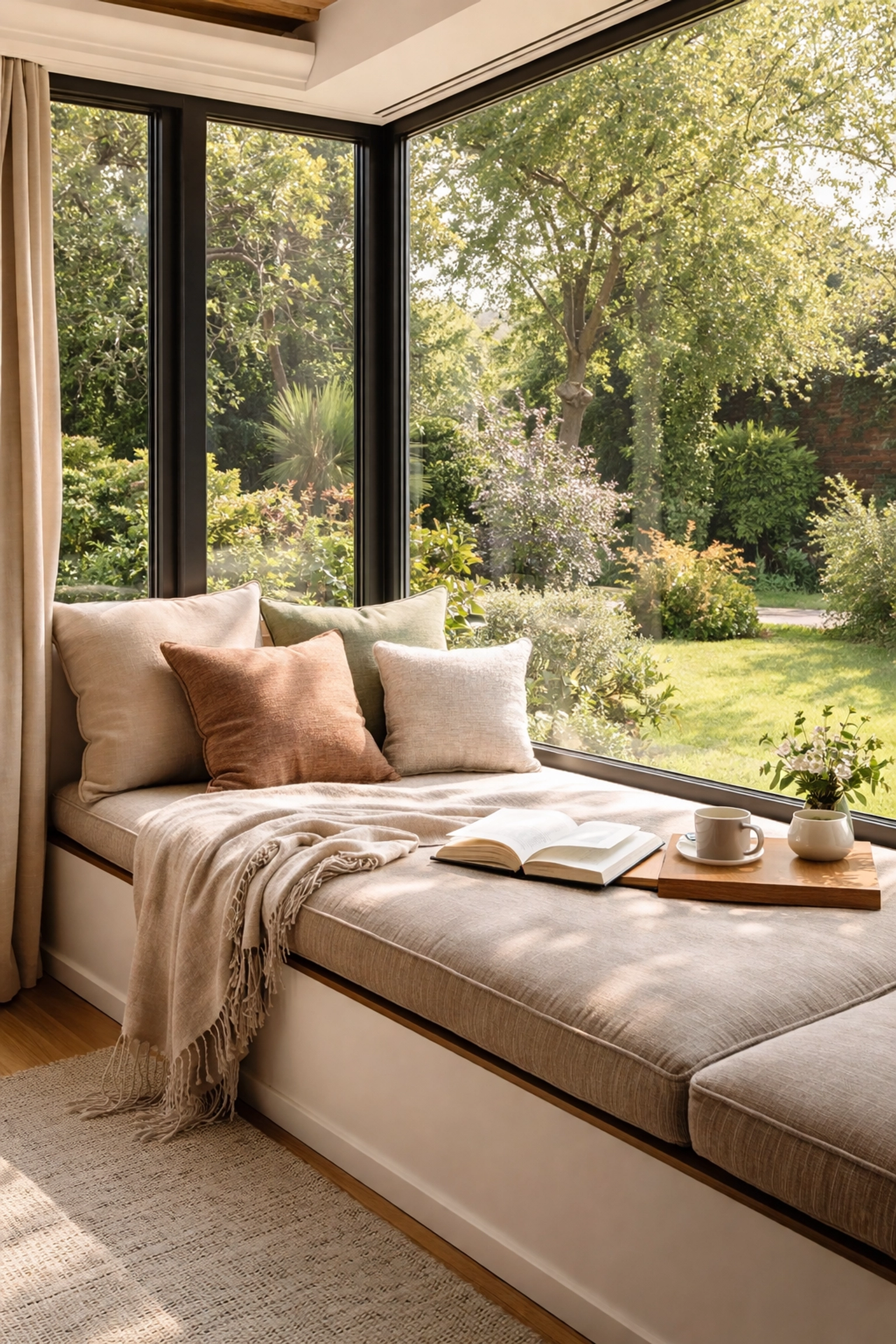
14. Incorporate Built-In Seating Near Windows
Window seats or built-in benches positioned alongside large windows or doors encourage you to sit close to the garden view. They become favourite spots for reading, people-watching, or simply enjoying the sunshine streaming in.
Plus, they're a brilliant use of space in extensions where every square metre counts.
15. Design Your Garden to Complement Your Extension
Finally, don't forget to look at this from the other direction. Once your extension is built, consider whether your garden needs updating to match.
A tired lawn and overgrown borders won't do justice to your beautiful new space. Even simple changes: new paving directly outside, a few architectural plants, or a defined seating area: can dramatically improve how connected everything feels.
Bringing It All Together
The best indoor-outdoor connections happen when you plan for them from the start. If you're still in the early stages of thinking about your extension, now is the perfect time to consider how it will relate to your garden.
At The Big Conversion Company, we work with homeowners across Bournemouth, Poole, and Christchurch to design extensions that don't just add space: they transform how you live. From the initial design conversations to the finishing touches, we think about how your new room will connect to everything around it.
Curious about what an extension might cost for your home? Try our house extension calculator for a quick estimate, or get in touch to chat through your ideas. We'd love to help you create that seamless indoor-outdoor living space you've been dreaming about.