
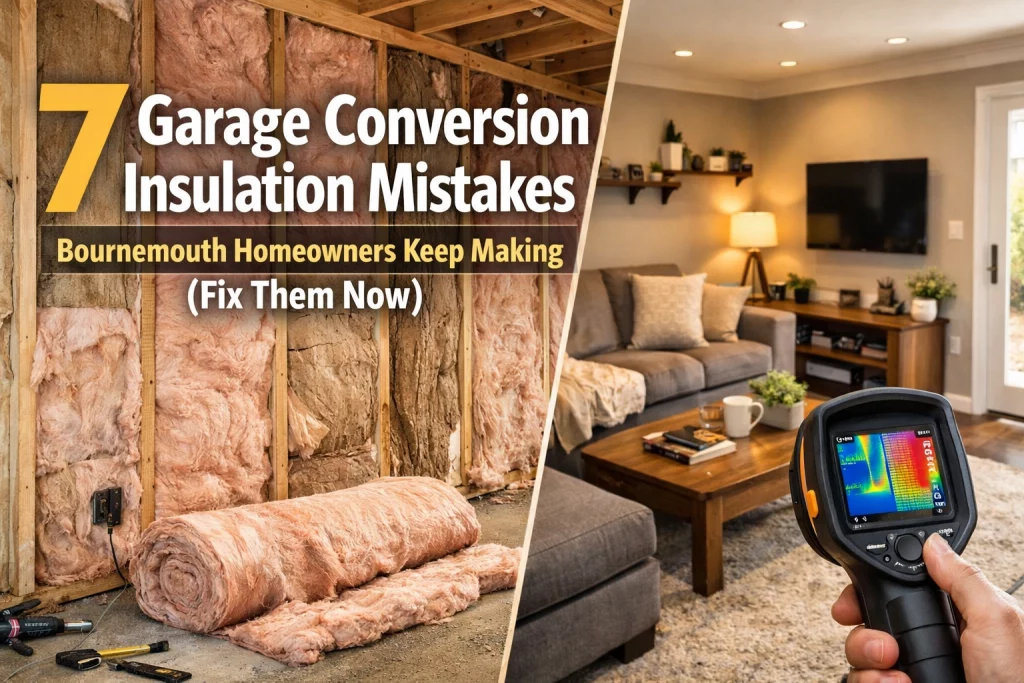
Are you thinking about converting your garage into a usable living space? Maybe you're dreaming of a home office, a guest bedroom, or that gym you've been promising yourself for years. Here's the thing though, while Bournemouth's coastal climate is generally mild, poorly insulated garage conversions can turn into money pits that are freezing in winter and stuffy in summer.
You might be surprised how many homeowners in Bournemouth and Poole make the same insulation mistakes, only to discover the issues months after completion when their energy bills skyrocket or condensation starts appearing on the walls. The good news? These mistakes are entirely preventable if you know what to look for.
Let's walk through the seven most common insulation blunders we see in garage conversions across the Dorset area, and more importantly, how you can avoid them.
Mistake #1: Ignoring Floor Insulation Completely
This is the big one. Your garage floor is probably just a concrete slab laid directly onto the ground, and that slab is basically a thermal highway pumping cold straight into your new living space.
Here's what happens: you spend thousands on wall and ceiling insulation, install beautiful flooring, and wonder why your feet are always cold and your heating bills haven't improved. That's because you're losing a massive amount of heat through the uninsulated floor.
In Bournemouth's Building Control standards, proper floor insulation is mandatory for habitable conversions. You'll typically need insulation that meets current U-values (around 0.25 W/m²K or better). This usually means either excavating the existing slab to add insulation beneath a new screed, or building up the floor level with insulated boards above the existing concrete.
Yes, it affects ceiling height. Yes, it adds to the budget. But skipping it means you're essentially throwing money out through your floor every single day.
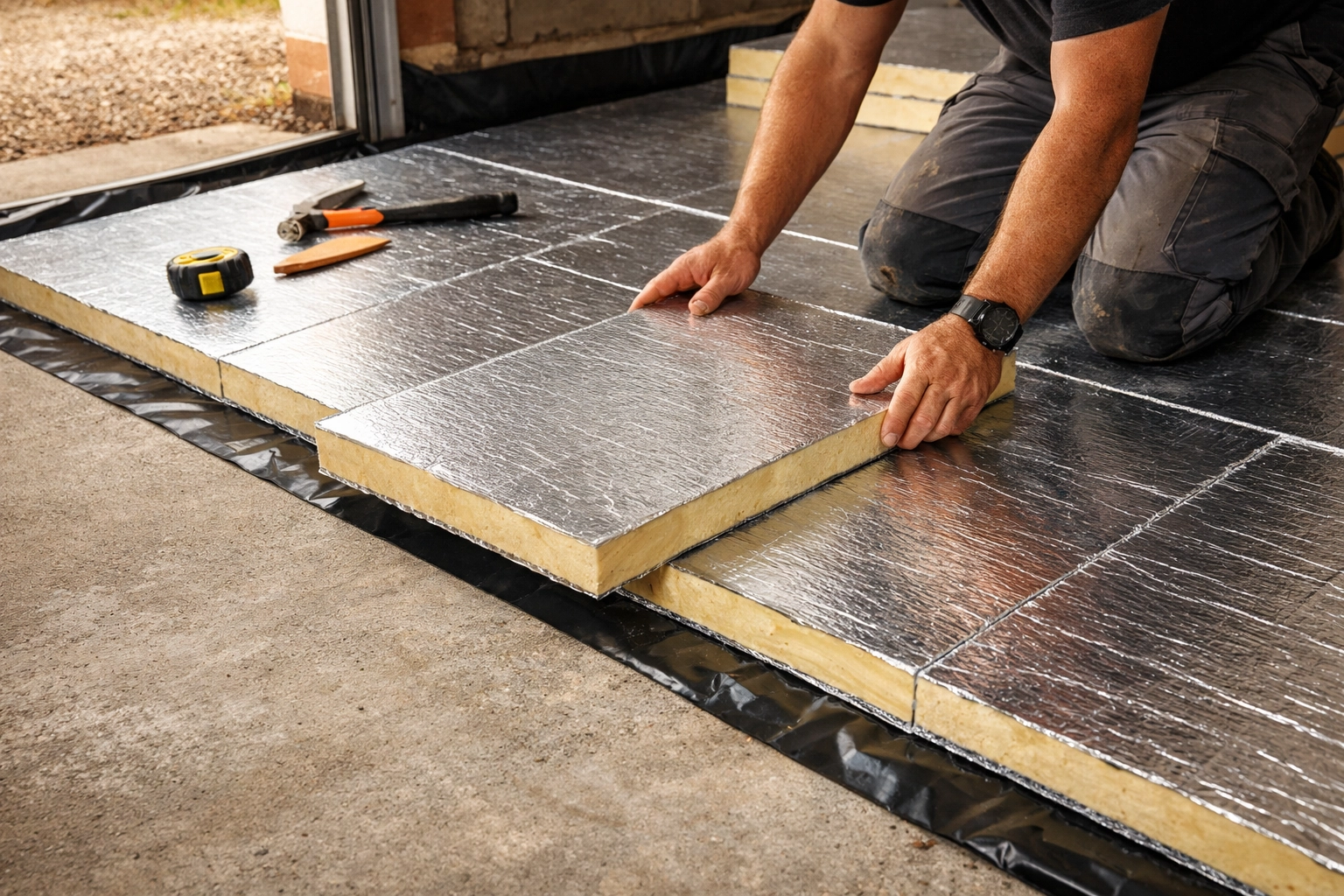
Alt text: Professional floor insulation installation in Bournemouth garage conversion showing PIR boards and damp proof membrane
Mistake #2: Choosing Cheap Wall Insulation Materials
You've probably heard the saying "buy cheap, buy twice." Nowhere is this more true than with insulation materials.
Some builders will quote lower prices by using Jablite or similar expanded polystyrene boards, materials actually designed for under-slab applications, not walls. While they provide some insulation value, they simply don't perform to the standards required for Building Regulations compliance in habitable spaces.
Proper wall insulation for your Bournemouth garage conversion should use materials like PIR (polyisocyanurate) boards or mineral wool batts that achieve the required thermal performance. These materials not only insulate better but also provide better sound dampening, something you'll appreciate if your new room shares a wall with a neighbor or the rest of your house.
The difference in material cost might be a few hundred pounds. The difference in comfort and energy efficiency over the years? Thousands.
Mistake #3: Overlooking Thermal Bridging
Thermal bridging sounds technical, but the concept is straightforward: it's any gap or weakness in your insulation envelope where heat escapes more easily.
Common thermal bridges in garage conversions include:
- The junction where your new insulated walls meet the existing house wall
- Around window and door frames
- Where internal walls connect to external walls
- At the roof eaves or ceiling junction
These cold spots don't just waste energy, they're also prime locations for condensation to form, which can lead to mold growth. In Bournemouth's relatively humid coastal climate, condensation management is crucial.
Your builder should be using continuous insulation techniques and thermal breaks at these junctions. It's detailed work that takes extra time, which is why some contractors skip it. Don't let them.
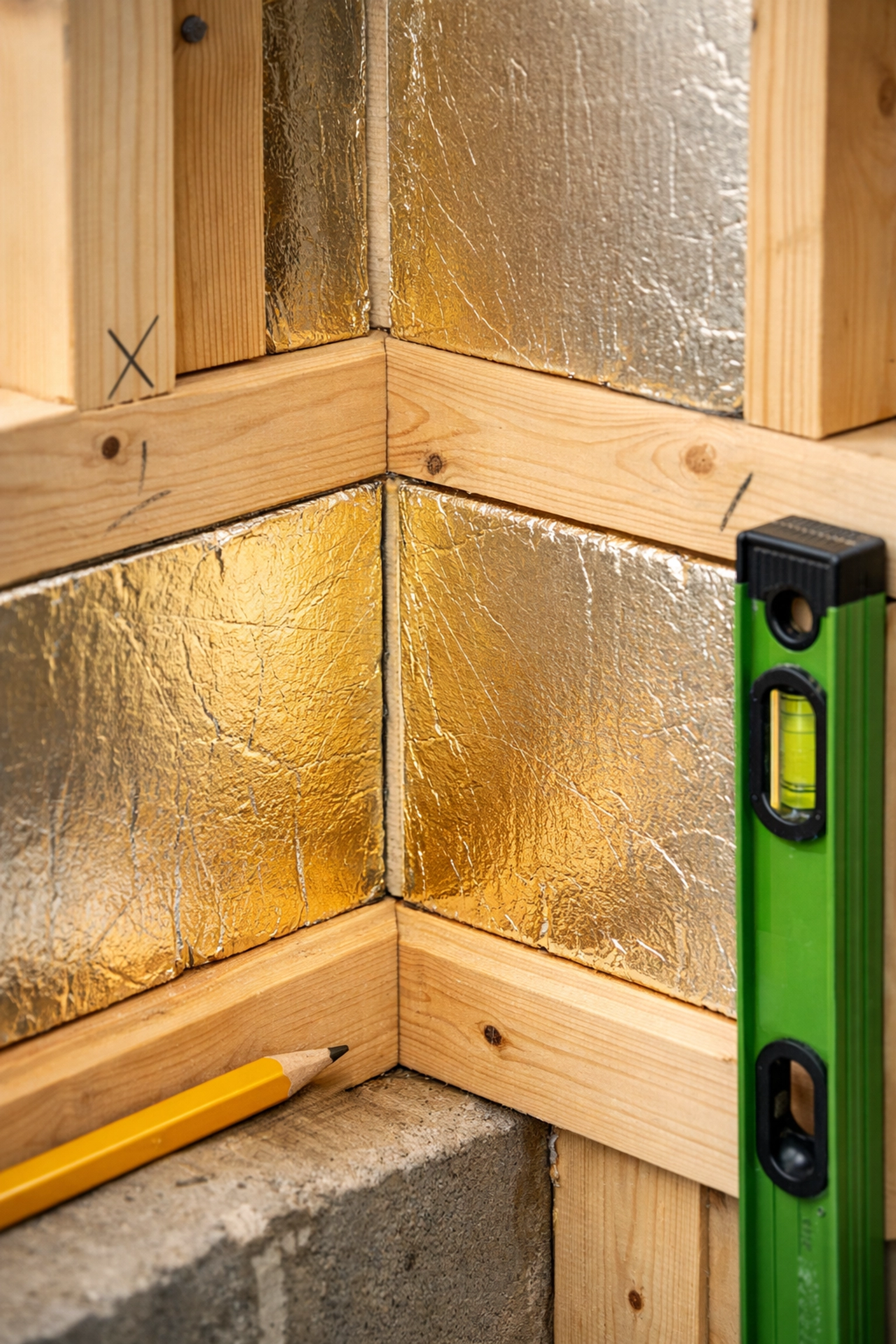
Alt text: Thermal bridging detail at wall junction in Poole garage conversion showing insulation continuity
Mistake #4: Skimping on Roof or Ceiling Insulation
Your garage likely has a flat roof or pitched roof with minimal or no insulation. Converting the space without upgrading the roof insulation is like wearing a winter coat but forgetting your hat, you're losing heat where it matters most.
Heat rises, which means your ceiling is one of the most critical areas for insulation. Building Regulations require roof insulation to achieve U-values around 0.15 W/m²K for habitable rooms, significantly better performance than older standards.
If you're creating a room in the roof space (a vaulted ceiling), the insulation typically goes between and beneath the rafters. If you're adding a flat ceiling below the roof structure, insulation goes above the ceiling joists.
Either way, this isn't an area to compromise on. Proper roof insulation transforms comfort levels and prevents that stuffy, overheated feeling you might experience on warm Bournemouth summer days.
Mistake #5: Neglecting Proper Ventilation
Here's a counterintuitive truth: the better your insulation, the more important ventilation becomes.
You're essentially creating an airtight box with excellent thermal performance. That's great for energy efficiency, but without adequate controlled ventilation, you'll trap moisture inside. This leads to condensation, black mold on walls and ceilings, and that musty smell that never quite goes away.
Bournemouth's coastal location means humidity levels can be higher than inland areas, making ventilation even more critical. Your conversion needs:
- Trickle vents in windows for background ventilation
- An extractor fan if the room includes any moisture-generating activities
- Proper sealing around doors and windows (controlled airtightness, not accidental draughts)
Building Control will check ventilation provisions as part of the approval process. Good builders design ventilation into the project from the start rather than bodging it at the end.
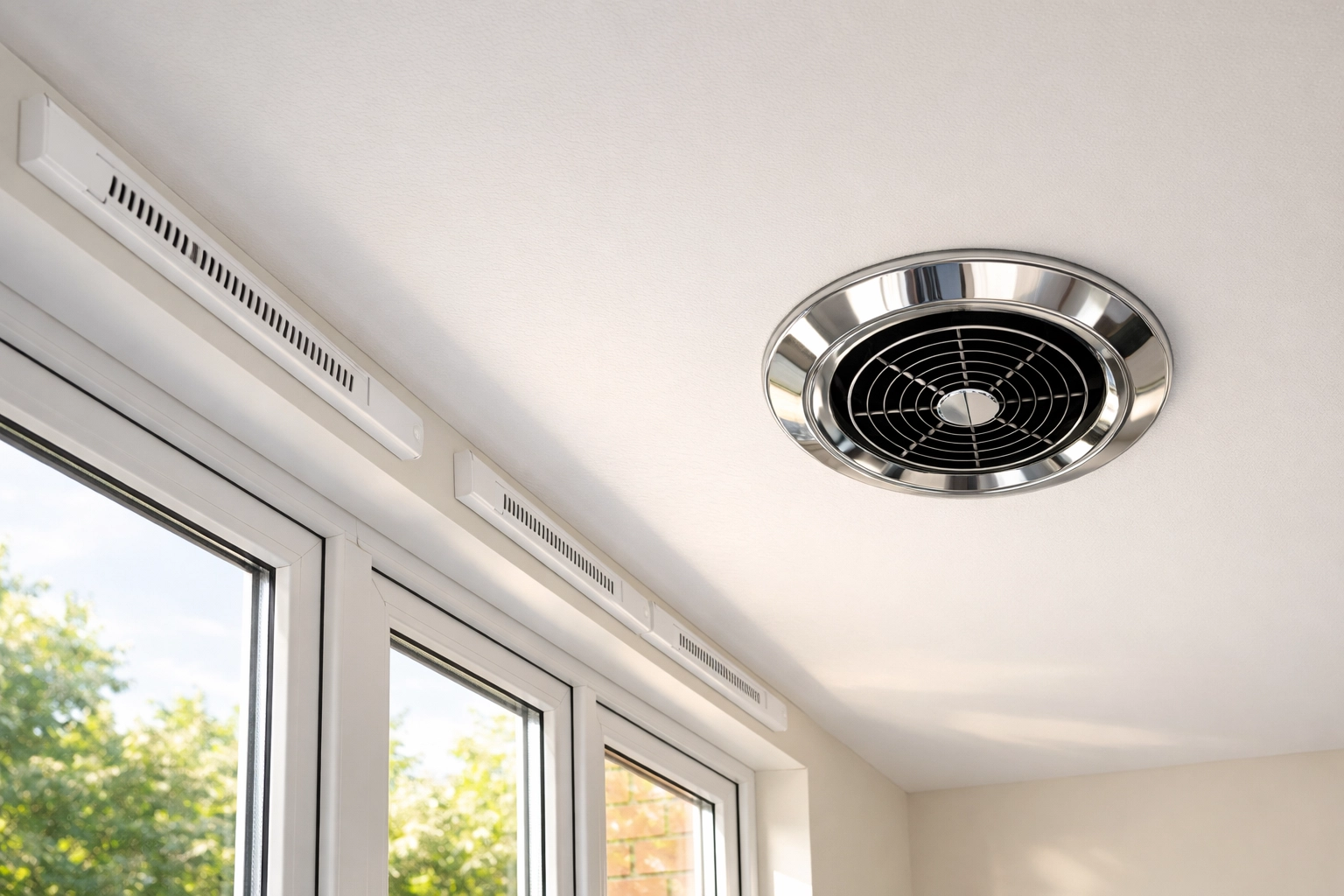
Alt text: Proper ventilation installation in Christchurch garage conversion showing trickle vents and extractor fan placement
Mistake #6: Forgetting About the Damp Proof Course
Your garage probably wasn't built with habitability in mind, which means the damp proof course (DPC) might be compromised or inadequate for a living space.
The DPC prevents moisture from the ground rising through your walls. When you add floor insulation and raise floor levels, or when you attach new insulated walls to existing garage walls, you need to ensure the DPC remains effective and properly linked.
Bridging the DPC, even accidentally, creates a pathway for dampness to enter your new space. This manifests as damp patches on walls, peeling paint, and eventually structural issues.
A proper garage conversion should include a DPC survey and remediation if necessary. This might involve injecting a new chemical DPC or installing a physical membrane. It's not the most exciting part of the project, but it's absolutely essential for long-term success.
Mistake #7: Skipping Building Control Sign-Off
You might be thinking, "Does this really count as an insulation mistake?" Yes: because without proper Building Control involvement, there's no independent verification that your insulation meets current standards.
Some homeowners in Bournemouth attempt to skip Building Control to save money or time. This is penny-wise and pound-foolish for several reasons:
First, improperly insulated conversions will cost you far more in energy bills over time than the Building Control fees. Second, when you eventually sell your property, the lack of Building Control certification can derail sales or reduce your selling price. Third, your buildings insurance might be compromised if you've made structural changes without proper approval.
Building Control inspectors don't just tick boxes: they verify that insulation is installed correctly, continuously, and to the right specifications. They're checking that thermal bridging is addressed, that ventilation is adequate, and that the work complies with current standards.
Think of Building Control as quality assurance for your investment. The fees (typically £500-£800 for a garage conversion in the Bournemouth area) are insurance that the work is done properly.
Getting Your Garage Conversion Right
If you're considering a garage conversion in Bournemouth, Poole, or anywhere across Dorset, the key takeaway is this: insulation isn't an area to compromise on. The upfront investment in proper insulation, ventilation, and Building Control compliance pays dividends in comfort, energy efficiency, and property value.
When you're comparing quotes from different builders, the cheapest option almost always cuts corners on insulation. Look for contractors who:
- Specify insulation materials and U-values clearly in their quotes
- Include floor insulation as standard
- Address thermal bridging and ventilation explicitly
- Factor in Building Control fees and inspections
- Have a portfolio of completed garage conversions with proper certification
Your garage conversion should feel like any other room in your house: comfortable year-round, free from condensation issues, and energy-efficient. Avoiding these seven common insulation mistakes is how you make that happen.
Need expert advice on your garage conversion project? We're Bournemouth locals who've completed dozens of insulated garage conversions to full Building Control standards. Get in touch and let's talk about creating a space that's comfortable, compliant, and built to last.